@GoogleStartups: If you're building generative media apps, our new Startup technical guide is your step-by-step manual for orchestrating…
Summary
Google Startups released a new technical guide for building generative media applications using Google DeepMind's models, covering models, tools, architectures, quality assurance, and economic considerations.
View Cached Full Text
Cached at: 07/29/26, 09:58 AM
If you’re building generative media apps, our new Startup technical guide is your step-by-step manual for orchestrating @GoogleDeepMind’s models.
What’s inside: • GenMedia models you can start building with today • The best tools for prototyping and production • Ideal architectures for autonomous agents • Embedded quality assurance practices like evaluation loops • Economic considerations of generative media apps • Ensuring trust and governance of synthetic assets
This guide will give your team the tools they need to build and deploy with absolute confidence. Get the guide now! https://goo.gle/genmedia_guide_GfSX…
Startup technical guide: Generative media
Source: https://cloud.google.com/resources/content/technical-guide-genmedia?utm_source=gfs&utm_medium=social&utm_campaign=FY26-Q3-GLOBAL-GCP41128-website-dl-startupgenmedia-195260&utm_content=gfs_twitter As generative media advances, so too do the opportunities for startups. Leaders are seizing the moment—building intelligent, context-aware workflows that embed generative media to deliver high-quality content at scale.
You can, too. This technical guide provides a blueprint for building creative and multimodal applications for everything from ad localization platforms to video editing apps.
Inside, you’ll learn:
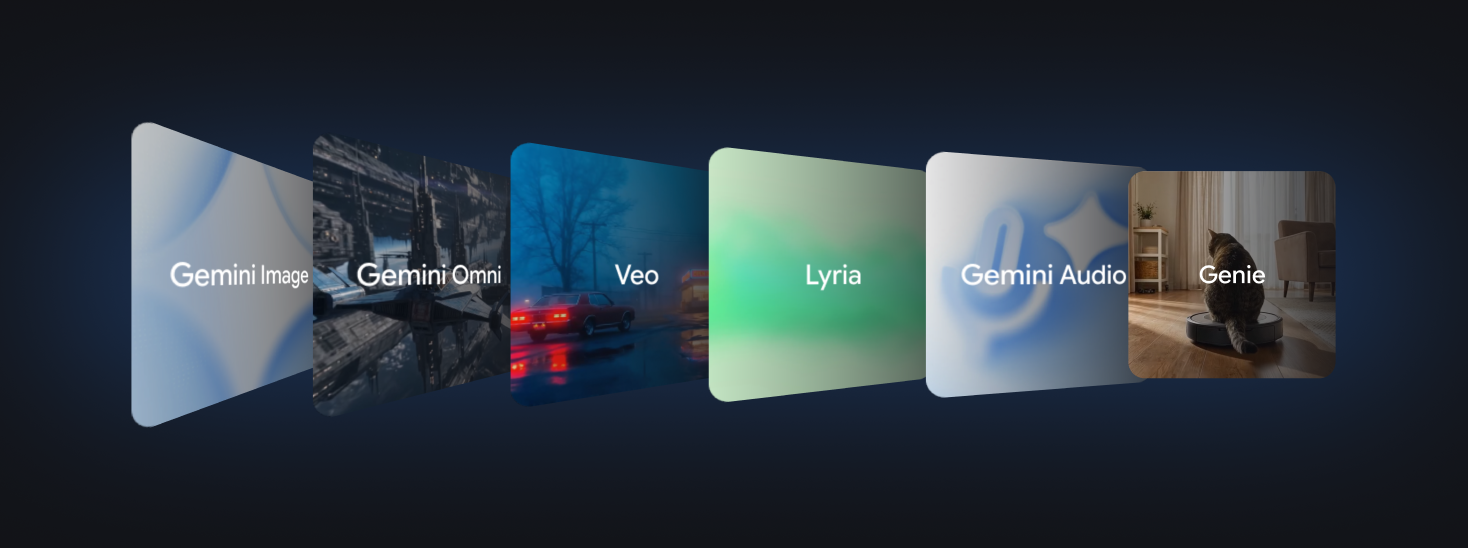
- How to build with Google DeepMind’s generative media models, including Gemini Image (Nano Banana), Gemini Omni, Veo, Lyria, Gemini Audio, Gemini, and Genie.
- Which tools to use for prototyping and production, including Flow, Stitch, AI Studio, Antigravity, and Gemini Enterprise Agent Platform.
- How programmatic guardrails, deterministic control, and advanced prompting patterns lead to professional, production-grade output from generative models.
- How to achieve trust and quality through things like automated evaluation pipelines, cryptographic provenance, and more.
- How to build a solid economic base for your generative media applications.
Similar Articles
@DeRonin_: here's how to become good at generative AI: in short, literally interface for each your agent or extended answer from m…
A post laying out how to get good at Generative UI, recommending Google's "LLMs are Effective UI Generators" paper, key frameworks like Vercel AI SDK, CopilotKit/AG-UI, A2UI and MCP Apps, plus practice projects and reference repos.
@nuannuan_share: Google suddenly released something unexpected. An 8-minute tutorial that walks you step-by-step through building your v…
Google unexpectedly released an 8-minute tutorial that guides users step-by-step through building their first AI agent.
@googleaidevs: After planning your idea, it’s time to build. This video shows you how you can use the Google ecosystem to construct an…
Google AI Developers shares a video on building AI-native apps with the Google ecosystem for the Build with Gemini XPrize Hackathon, which runs through August 17.
Google literally dropped the new SEO playbook for AI
Google published an official guide on optimizing websites for its generative AI search features, including AI Overviews and AI Mode, providing SEO recommendations directly from the source.
Generative Media | I/O 2026 Keynote
The article introduces updates to generative media products announced at the Google I/O 2026 Keynote, including Google Pics image editing tool, Stitch UI design tool, and new features of Google Flow such as Gemini Omni, multi-agent parallel processing, custom tools, and music remixing. It emphasizes how the technology helps users quickly turn their creative ideas into reality.