@NikkiSiapno:开发者应知的 35 个系统设计概念:1. 事件驱动架构 ↳ https://lucode.co/event-driven-archite…
摘要
一篇 Twitter 帖子列举了 35 个开发者应知的系统设计核心概念,并附有详细解释的链接,旨在帮助开发者学习和复习关键主题。
查看缓存全文
缓存时间: 2026/06/10 05:48
开发者应了解的35个系统设计概念:
-
事件驱动架构 ↳ https://lucode.co/event-driven-architecture-lil1nlsm…
-
Redis ↳ https://lucode.co/redis-explained-lil1nlsm…
-
gRPC ↳ https://lucode.co/grpc-explained-lil1nlsm…
-
数据库类型 ↳ https://lucode.co/database-types-lil1nlsm…
-
断路器 ↳ https://lucode.co/circuit-breakers-lil1nlsm…
-
ACID vs BASE ↳ https://lucode.co/acid-vs-base-lil1nlsm…
-
限流 ↳ https://lucode.co/rate-limiting-lil1nlsm…
PS - 如果你想要结构化学习路径,加入我的免费周报,即可获取我免费的142页系统设计手册 → https://lucode.co/system-design-handbook-dp1…
-
微服务 ↳ https://lucode.co/microservices-lil1nlsm…
-
系统设计质量属性 ↳ https://lucode.co/system-design-quality-attributes-lil1nlsm…
-
CAP定理 ↳ https://lucode.co/cap-theorem-lil1nlsm…
-
幂等性 ↳ https://lucode.co/idempotency-in-api-design-lil1nlsm…
-
REST API ↳ https://lucode.co/rest-api-protocol-li1…
-
同步与异步 ↳ https://lucode.co/sync-vs-async-lil1nlsm…
-
网络协议 ↳ https://lucode.co/network-protocols-lil1nlsm…
-
变更数据捕获 (CDC) ↳ https://lucode.co/change-data-capture-cdc-explained-lil1nlsm…
-
CI/CD管道 ↳ https://lucode.co/ci-cd-lil1nlsm
-
SSO(单点登录) ↳ https://lucode.co/sso-single-sign-on-li1…
-
JWT ↳ https://lucode.co/json-web-token-jwt-lil1nlsm…
-
健康检查与心跳 ↳ https://lucode.co/health-checks-vs-hearbeats-lil1nlsm…
-
API网关 vs 负载均衡器 vs 反向代理 ↳ https://lucode.co/api-gateway-vs-lb-vs-rp-lil1nlsm…
-
HTTPS ↳ https://lucode.co/https-explained-lil1nlsm…
-
负载均衡算法 ↳ https://lucode.co/load-balancing-algorithms-lil1nlsm…
-
数据库缓存 ↳ https://lucode.co/database-caching-strategies-lil1nlsm…
-
API协议 ↳ https://lucode.co/api-architecture-styles-lil1nlsm…
-
CDN ↳ https://lucode.co/cdn-lil1nlsm
-
数据库索引 ↳ https://lucode.co/database-indexing-lil1nlsm…
-
消息队列 ↳ https://lucode.co/message-queues-lil1nlsm…
-
哈希 vs 加密 vs 令牌化 ↳ https://lucode.co/hashing-vs-encryption-vs-tokenization-lil1nlsm…
-
服务发现 ↳ https://lucode.co/service-discovery-in-distributed-systems-lil1nlsm…
-
发布/订阅 ↳ https://lucode.co/pub-sub-lil1nlsm…
-
连接池 ↳ https://lucode.co/connection-pooling-lil1nlsm…
-
正向代理 vs 反向代理 ↳ https://lucode.co/forward-vs-reverse-proxy-lil1nlsm…
-
一致性哈希 ↳ https://lucode.co/consistent-hashing-lil1nlsm…
-
SQL vs NoSQL ↳ https://lucode.co/sql-vs-nosql-lil1nlsm…
-
可观测性 ↳ https://lucode.co/observability-clearly-explained-lil1nlsm…
你觉得还应该加上哪些?
——
收藏备用。 转发帮助他人学习成长。
事件驱动架构清晰解释
来源:https://blog.levelupcoding.com/p/event-driven-architecture

由 Sonar 呈现
问题不在于是否使用 AI。而是如何采用它,同时不悄悄增加风险、降低代码质量。这种转变正是为什么现在关于 AI 时代的软件质量讨论如此重要。这正是Sonar Summit (https://lucode.co/sonar-summit-z7nl) 上正在展开的对话。

这场线上活动就在今天。免费观看/参加。
在此处(免费)查看 (https://lucode.co/sonar-summit-z7nl)
大多数系统开始时都是一条简洁的调用链:服务 A 调用 B,B 调用 C,C 返回结果。
一旦增加一个新的下游需求,你突然就需要修改三层深处的代码,重新部署一半的栈,然后祈祷这条链不会断裂。
这就是直接耦合的隐性成本——每一个新功能都在让这个结变得更紧。事件驱动架构(EDA)能切断它。
与直接调用不同,服务之间通过广播事件来通信:事件是已发生事实的描述。任何关心的服务都可以做出反应。发送事件的服务无需知道谁在监听。
事件驱动架构(EDA) 是一种设计风格,组件之间通过生产和消费事件来进行通信,而不是直接相互调用。
事件是一条消息,描述已经发生的事情:“订单已下单”、“付款已收到”、“温度超过阈值”。
它是事实,而非命令。
每个 EDA 系统都有三个主要角色:
- 生产者 → 检测到变化,并将事件发布到代理。它们不知道也不关心谁会接收。
- 代理 → 中央枢纽(Kafka、RabbitMQ、AWS EventBridge),接收来自生产者的事件,并将副本路由给每个感兴趣的订阅者。它还可以在流量高峰时缓冲事件,确保消费者不会被压垮。
- 消费者 → 订阅特定类型的事件,并异步做出反应。某个消费者的速度变慢不会影响其他消费者或生产者。
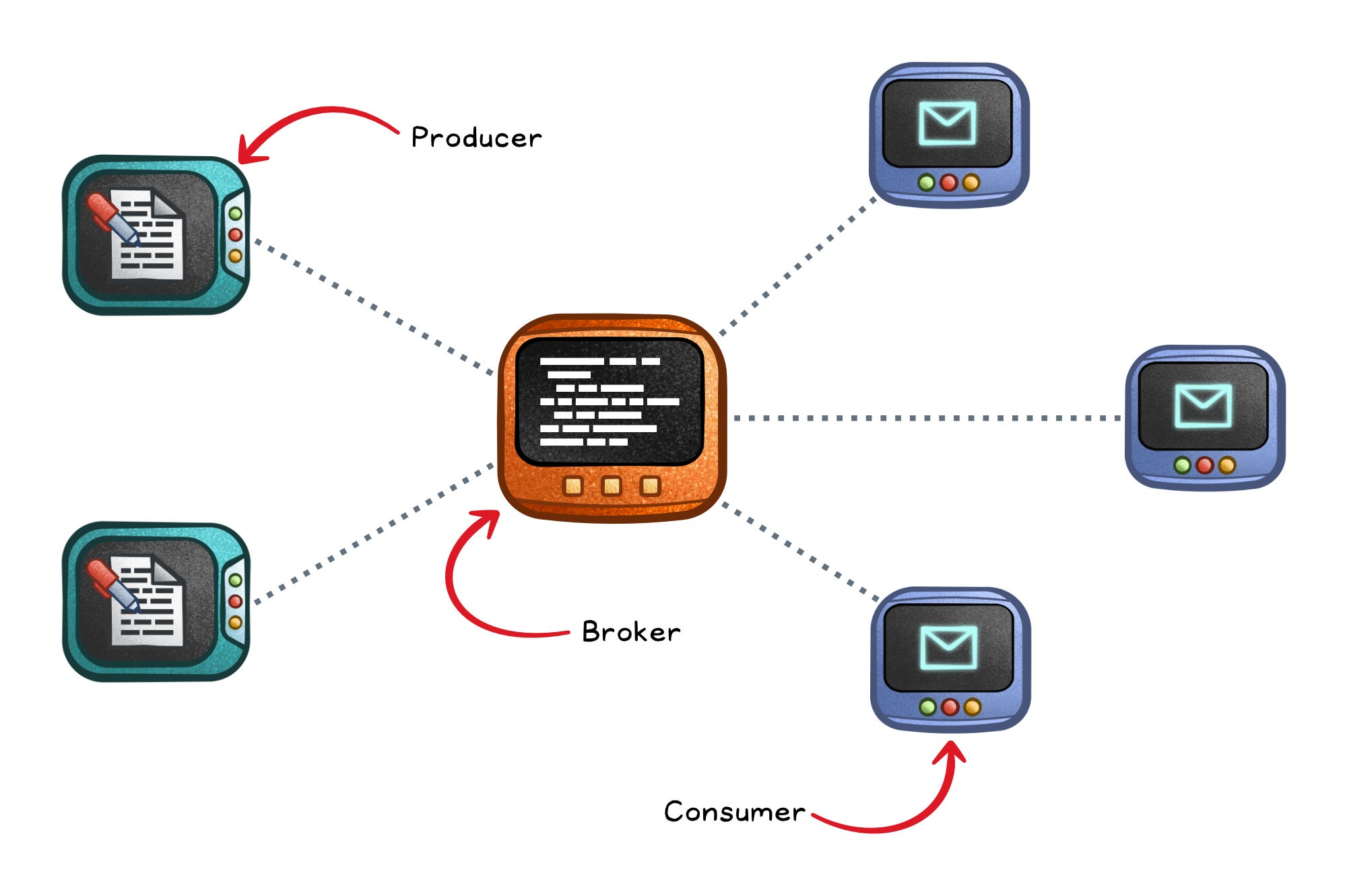
流程如下:
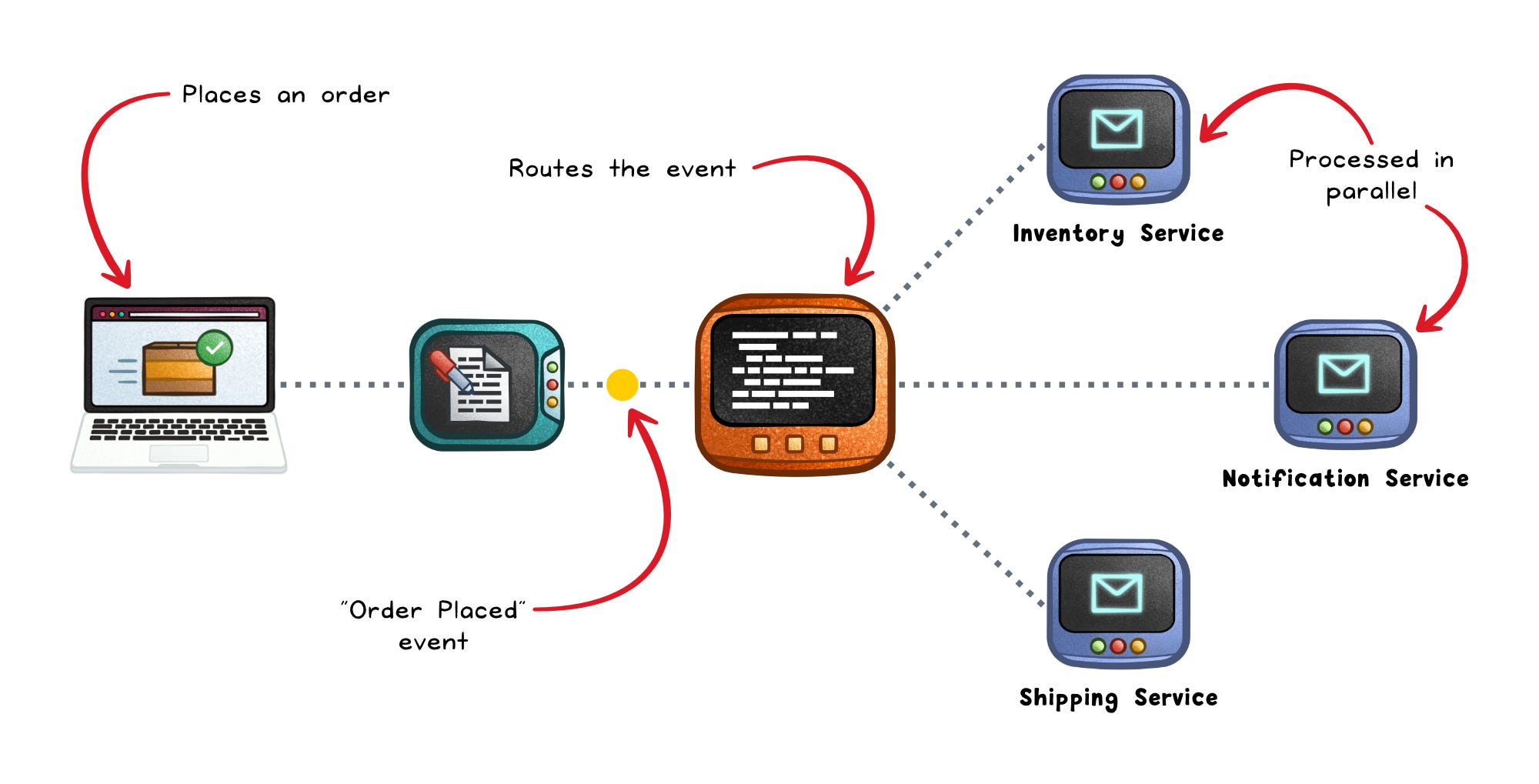
库存服务、通知服务和配送服务并行工作,而订单服务甚至不知道它们的存在。
这就是核心能力:解耦。团队独立部署,服务独立演进。新功能意味着添加一个新的消费者,而不是修改现有服务。
没有 EDA,协调就会成为每个新能力都要付出的代价。
EDA 的价值只有当你感受到它消除了多少摩擦时才会体现出来。
- 松耦合 → 生产者和消费者只共享一个事件契约,因此双方可以独立演进,无需了解对方的内部实现。
- 异步扇出 → 一个事件能瞬间触发多个并行工作流,因此添加一个新的下游步骤不会带来任何延迟成本。
- 弹性缓冲 → 代理吸收流量高峰,生产者可以继续发送事件,而消费者按自己的节奏进行扩展。
- 可插拔扩展性 → 新功能就是新的消费者,而不是对现有服务的修改。
- 故障隔离 → 某个消费者故障不会级联扩散;事件会排队等待直到服务恢复。
EDA 并没有消除复杂性,而是将其转移了。
上游的架构变得更清晰,职责转移到了事件设计、代理运维和消费者可靠性上。
- 调试复杂性 → 故障不会沿着清晰的调用路径出现。你只看到结果缺失,而非原因。链路追踪和集中式日志记录变得至关重要。
- 投递语义 → 大多数代理保证至少一次投递。重复是可能发生的。消费者必须是幂等的,否则你可能会面临重复扣费和状态不一致的风险。
- 最终一致性 → 服务异步更新。暂时的不一致是正常的,但对于需要立即正确性的流程来说并不安全。
- 代理依赖 → 代理是关键基础设施。如果它出现故障,事件将停止流动,而且往往是静默的。
当系统需要针对单个触发器同时执行多个操作,或者团队需要独立移动而不互相踩脚时,EDA 大放异彩。
适合使用 EDA 的场景:
- 一个动作需要触发多个独立的下游反应。
- 流量突发或不可预测,需要代理来吸收峰值。
- 在微服务架构中工作,团队可以独立部署。
- 需要集成异构系统,而不需要严格的 API 契约。
- 需求频繁变更,希望通过订阅而不是修改来增加行为。
应避免使用 EDA 的场景:
- 需要严格的事务原子性,例如,在一个操作中扣减一个账户并增加另一个账户。事件会引入最终一致性,而你需要的是 ACID。
- 需要跨多个消费者的全局有序性。分布式代理中的全局排序既困难又昂贵。
- 需要立即确认。如果工作流要求“这次操作立刻成功了?”,请求-响应模式更合适。
- 系统小而简单。在一个只有三个服务的应用中引入代理、事件模式和消费者基础设施,带来的开销远大于收益。
搞对架构只是前一半工作。下面的实践决定了架构在增长过程中是否还能保持可维护性。
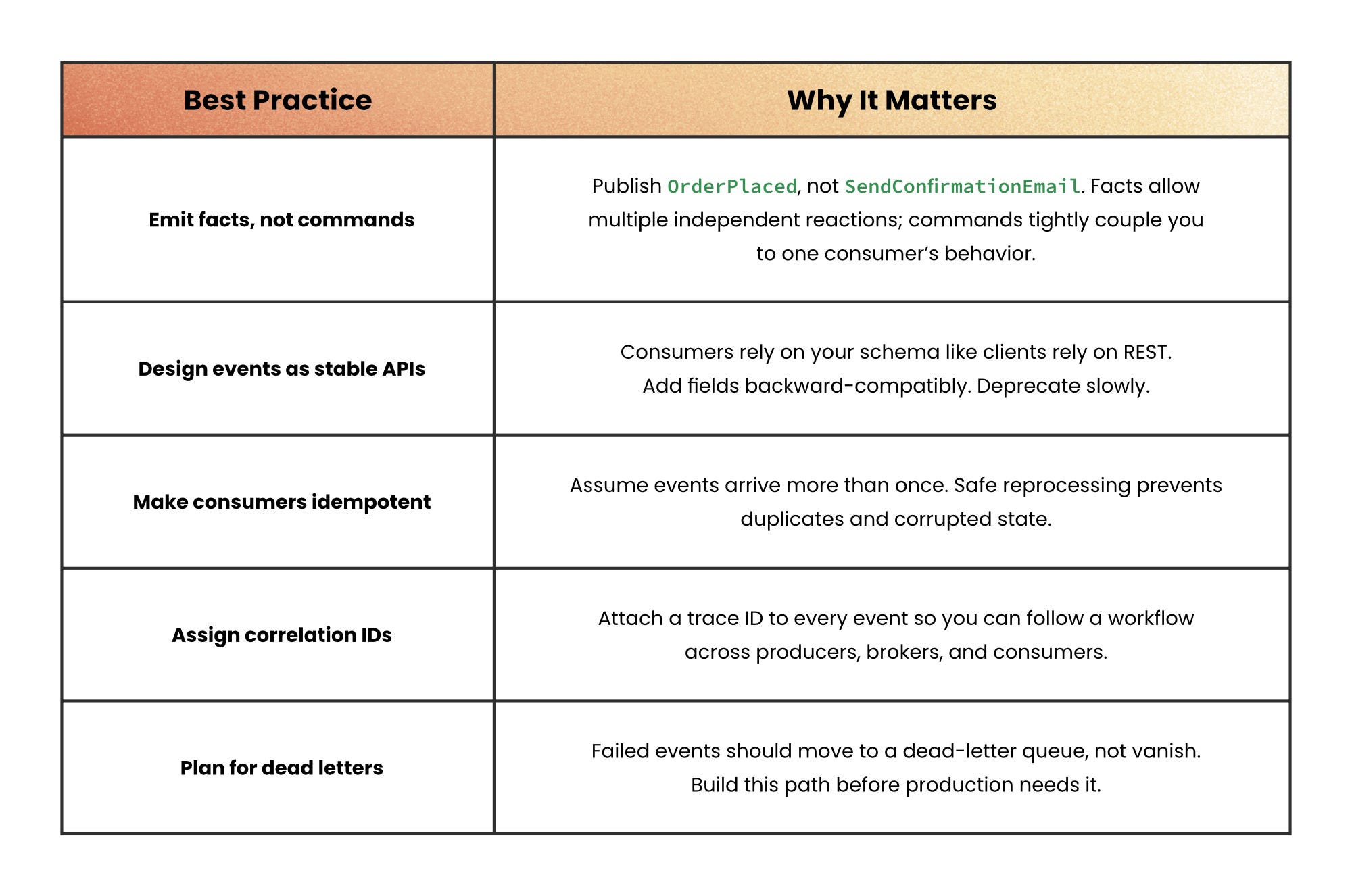
它是悄悄积累起来的:多一次调用,多一个依赖,多一次协调部署。
EDA 打破了这种模式,让组件仅对自己知道的事情负责:某个事件发生了。
系统的其余部分对此如何处理不再是你需要关心的问题。这不仅仅是更干净的架构,它还强制明确了所有权。
👋 如果你喜欢这篇文章 → 点赞 + 转发 + 分享,帮助他人学习系统设计。
关于本文的讨论
准备了解更多?
Level Up Coding (@LevelUpCoding_): 开发者应了解的35个系统设计概念:
微服务:https://t.co/1g1muS2fw2
系统设计质量属性:https://t.co/o7iPtNnY9b
可观测性:https://t.co/jxXKHwFShu
CAP定理:https://t.co/wIXbw7lQD8
幂等性:
相似文章
@0xlelouch_: 我依然会推荐给在职开发者的十大系统设计资源:1) 《设计数据密集型应用》(Kleppmann)——重新…
一条推特线程,列出了十大系统设计资源,包括书籍、博客和框架,并附有Martin Fowler网站的链接以供进一步阅读。
@swapnakpanda: 你了解系统设计吗?立即保存此推文,我保证到2026年底你会提升100%。
一条关于系统设计的Twitter推文,承诺到2026年底提升技能。
@techyoutbe: https://x.com/techyoutbe/status/2076189458869928324
一份关于 40 个后端概念的指南,分为六个阶段,从 HTTP 基础到系统架构,旨在帮助工程师准备系统设计面试。
@bibryam: 良好的系统设计始于架构图之前。Donne Martin的系统设计入门:1. 定义用例和……
这篇文章是一条推文,宣传Donne Martin的系统设计入门,这是一个开源的GitHub仓库,提供学习系统设计和准备技术面试的资源。
@Franc0Fernand0:如果我要从零开始学习系统设计基础,我会读这16篇精选文章(链接如下)……
一份包含16篇文章的精选清单,推荐给从零开始学习系统设计基础的读者。