Cached at:
05/23/26, 03:32 PM
# Solving the "Zork" mystery
Source: [https://www.dpolakovic.space/blogs/zork-part2](https://www.dpolakovic.space/blogs/zork-part2)
*19 May 2026 \- \.\.\.and finishing the game while at it\.*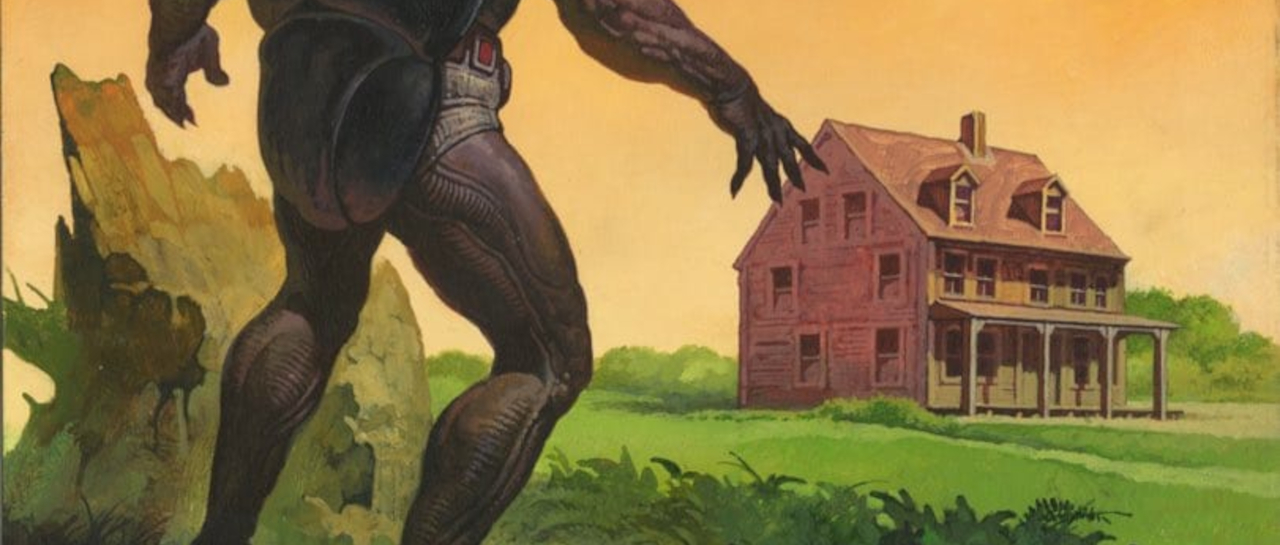
It's been two years since my[last Zork adventure](https://www.dpolakovic.space/blogs/zork.html)and I finally got time to finish it\. But before I restored my last save, I checked my blog notes and there was one "opened issue" which I wanted to address\.
I glossed over problematic trivia about Zork which says, that "zork" was a jargon word for unfinished program in MIT Dynamic Modeling Group back in 70's\. I also pointed out, that Wikipedia does not provide source to this information, to which one reader messaged me that I am wrong\. And I was\!
**Source 1:**Article "The History of Zork \- First in a series" in The New Zork Times, from 1985\.[\(Link\)](https://archive.org/details/New_Zork_Times_The_Vol._IV_No._1_1985-03_Infocom_US/page/6/mode/2up)*Tim Anderson says: We tended to name our programs with the word "zork" until they were ready to be installed on the system\. Lebling and Blank, two other creators of the game are titled as a "Suspected Editor" and "Editorial Editor" respectively in this publication\.*
For some reason I remembered that this information wasn't right\. So I spent some time abusing the Wikipedia API and mining in edit history and I found that this information appeared for the first time in the[2001 edit](https://en.wikipedia.org/w/index.php?diff=298407)without any source\. It stayed like that until the[October 2014 edit](https://en.wikipedia.org/w/index.php?diff=628667642)\(13 years later\!\) when it got the source number 1 quoted above\. Since then, there were 41 different edits, of which the most interesting one was[December 2016 edit](https://en.wikipedia.org/w/index.php?diff=757450947)in which the information got 4 different sources of which 3 didn't say anything about "zork" being used for work in progress stuff, only as general nonsense word\.
**Source 15:**Article "Masters of the Game" in The Boston Globe Magazine from May 1984\.[\(Link\)](https://web.archive.org/web/19970607204921/http://www.csd.uwo.ca/Infocom/Articles/globe84.html)*Marc Blank says: Actually, it's just a nonsense word\. There are all kinds of words like that that hackers tend to use \-\- words like 'frob\.' Frob means thingamajig, and it can be used as any part of speech\. It's a generic noun and verb\.*
**Source 18:**Article "History of the Zork" in special edition of IEEE Computer magazine from 1979\.[\(Link\)](https://www.cs.tufts.edu/comp/150FP/archive/david-lebling/zork.pdf)*Authors of the game say: \.\.\.the \[game\] name was chosen because it was a widely used nonsense word, like "foobar"\.*
**Source 19:**Infocoms publication "Down From the Top of Its Game: The Story of Infocom" from 2000\.[\(Link\)](https://archive.org/details/infocom-paper-2000-12-15)directly quotes the interview from source 15\. And then there is the Tim Andersons' version in**source 1**\.
I did remembered this contradiction of sources 18 and 1, and lack of information from sources 15 and 19, and this time I wouldn't let it slide\. I searched for other Zork related documents and found one more material not exactly in line with Tims' version\.
Article "A Zork By Any Other Name" in The New Zork Times Vol\.3 No\.1 1984[\(Link\)](https://archive.org/details/vgmuseum_infocom_nzt-winter84/page/n1/mode/2up)*\.\.\.authors Marc Blank and Tim Anderson were at a complete loss in thinking up a good name for their new game\. Since they wanted people to play it, and since you can't run a nameless program, they needed something quick\. Blank chose Zork, a nonsense word commonly used at the MIT Lab for Computer Science as an all\-purpose interjection\.*
No author is named under the article or from the redaction but it's the same Infocom owned medium, which will one year later published Tim Andersons' version\.
Then I found this excelent article by Nick Monfort, Post Position A Note on the Word “Zork”[\(Link\)](https://web.archive.org/web/20100112110305/https://nickm.com/post/2010/01/a-note-on-the-word-zork/)\. He focused on the etimology of the word and searched/speculated how the authors could came up with it\. There were 4 major hits one including the most well known "zorch" MIT semi\-jargon word for burning stuff\. I don't want to spoil the rest of the article as it's one of the better reading materials on the net, but I will include one quick teaser in a form of a picture\.
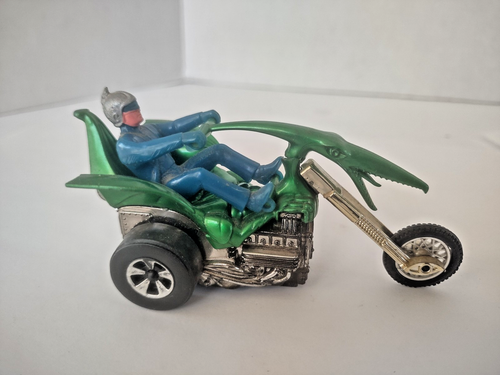
*zork pterodactyl chopper\.\.\. you can't make this shit up*Let's focus\. I tried to get the first hand testimony now\. Lebling, Anderson, Blank, Daniels,*the implementors*, were unreachable to me, so I wrote to only two people I knew, that were on MIT in 1970's\. The Last true hacker Richard M\. Stallman and Good\-news\-bad\-news Richard P\. Gabriel\. I don't want to take out any content of our correspondence without their allowence, but none of them heard the word "zork" in the context of unfinished program\.
You can find a lot of stuff online about the word itself, but only one quote mentions that there was some kind of habit of naming unfinished code a "zork"\. Why do I care? To me it just seems weird how could game with such an impact on home computing world not carry over this jargon to this day\. Especially considering the fate of other jargon words of the era like "hack" or sooner mentioned "foobar", which didn't got boost from any commercial company behind them\.
I would love to get a clear proof that it was a real jargon word, not case of Chandler Bing's one\-person slang, so computing history could include this term proudly among other computer babble\. Anyway, my call from last time stands\. If there is anybody who can confirm that it was general habbit to name your unfinished code a "zork", please write me an email\. I will either propose the Wikipedia edit or message to ESR to add it into the hackers' jargon file\.
In a meantime, I am editing my[Let's play Zork](https://www.dpolakovic.space/blogs/zork.html)blog to fluently continue with the rest of my playtrough, so in few days \(maybe weeks\) you can check out how I struggled with*the*mirror room and other stuff\. As much as I felt let down after my first run, I enjoyed this one good\. I am definetly going to pick the sequel next time\.
---
*\* The beautiful title picture is courtesy of Gino D'Achille, 1980, which I found in[this cool blog](https://70s-sci-fi-art.ghost.io/very-normal-houses/)\.*