Cached at:
04/20/26, 02:46 PM
# Accurately analyzing large scale qualitative data
Source: [https://openai.com/index/viable/](https://openai.com/index/viable/)
OpenAIThe shift to the cloud has led to a surge in data collection, but businesses are grappling to extract valuable insights, largely due to the unstructured nature of that data\.
Extracting meaningful insights from feedback is a time\-consuming and tedious process that typically requires human reasoning\. And while many tools exist to summarize large datasets,[Viable\(opens in a new window\)](http://askviable.com/)stands out as one of the first companies that unlocked the power of GPT‑3, and now GPT‑4, to go beyond simple summarization and conduct in\-depth analysis with exceptional accuracy on a large scale\.
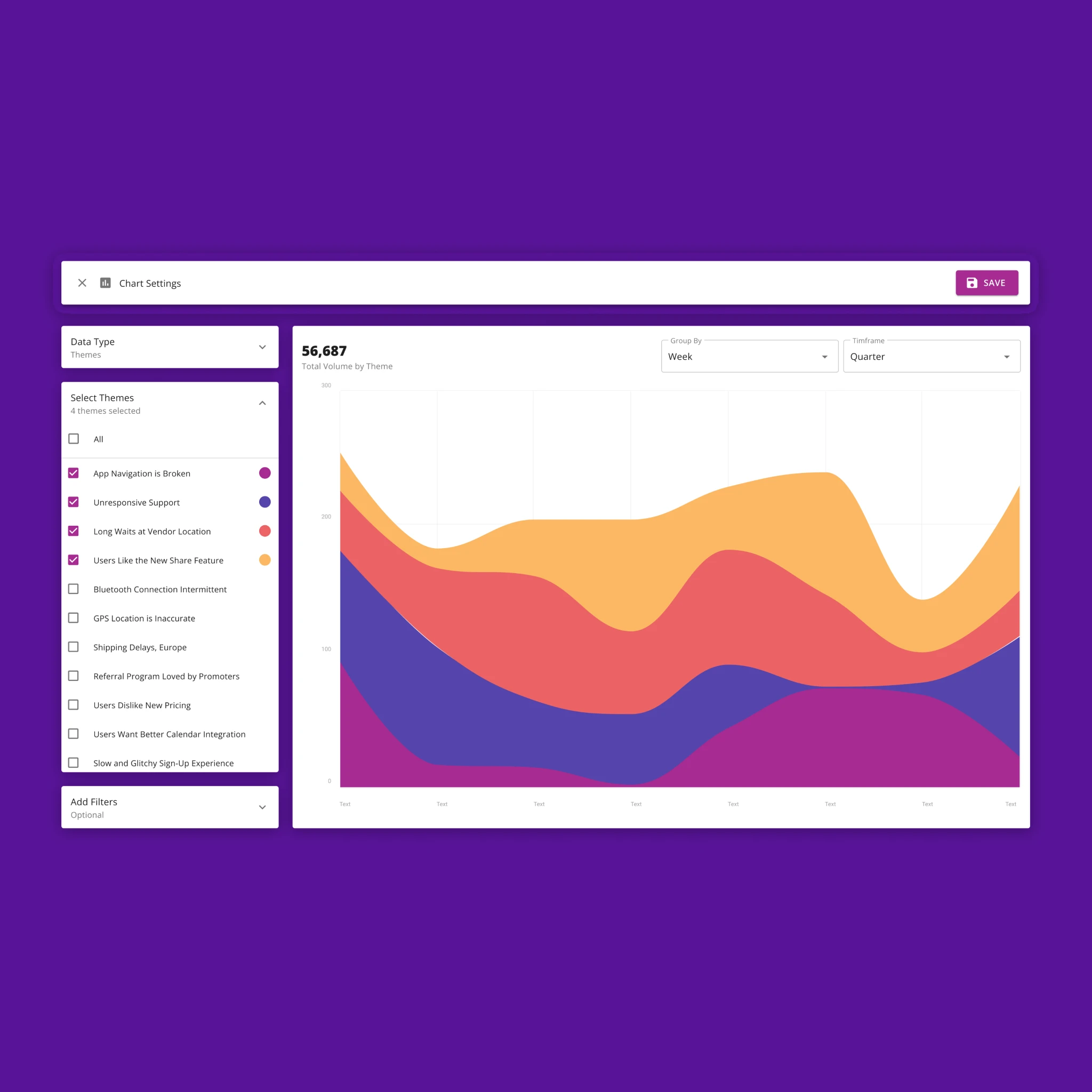
Summarization and analysis are distinct ML tasks with different training data and models: summarization compresses information, while analysis adds context for better comprehension\. When converting vast data into accurate reports, summarization overlooks crucial nuances essential for grasping true customer sentiment and can distort data, leading to flawed business decisions\. Text like online reviews and support tickets are often rife with ambiguity, sarcasm, and negation, requiring additional context for real comprehension\.
Viable has tackled this challenge by[fine\-tuning OpenAI’s LLMs\(opens in a new window\)](https://www.askviable.com/blog/revolutionizing-sentiment-analysis-with-gpt-4-part-1)to deliver fast and accurate insights from customer support interactions to recorded transcripts and everything in between, using GPT‑4 to analyze qualitative data on a scale that exceeds current techniques and performance\. Viable’s platform provides companies with actionable insights to improve their Net Promoter Score \(NPS\), reduce support ticket volumes, and better inform their product roadmaps, all while saving on operating costs\.
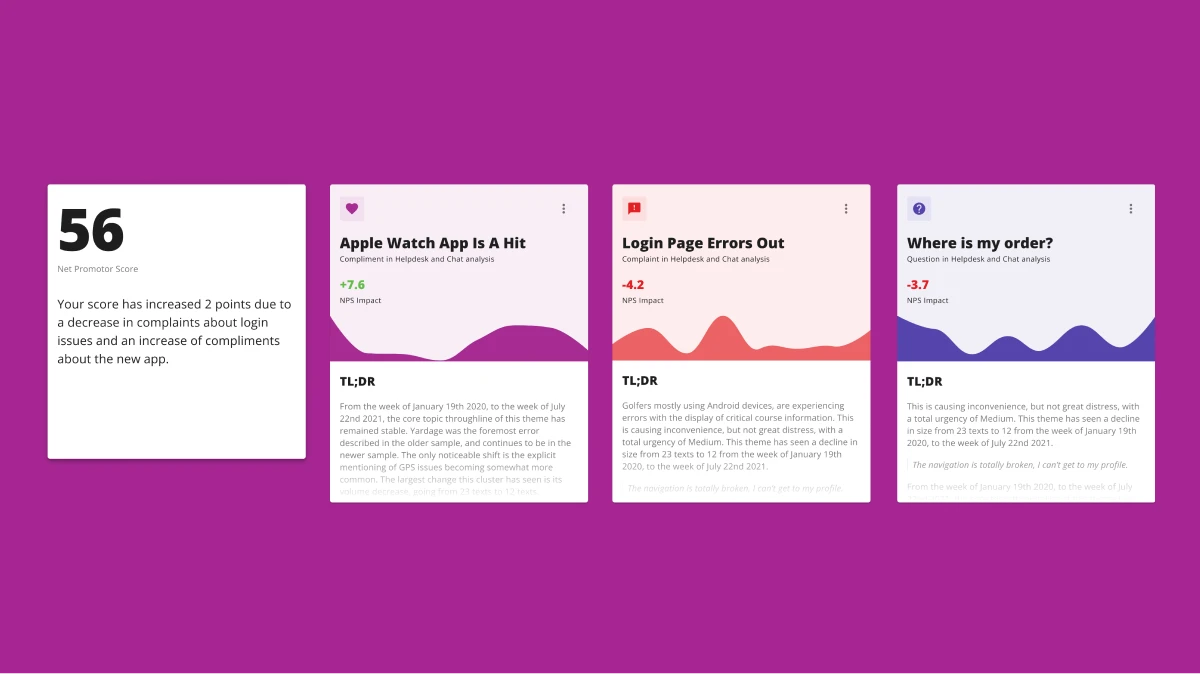
Viable was founded in 2020 with the initial aim of helping businesses achieve product\-market fit\. They quickly realized that even the most data\-driven organizations were unable to make full use of their qualitative data in decision\-making\.
“We recognized that there was a huge opportunity to use AI to help businesses make sense of the vast amounts of data they generate through customer feedback,” said Dan Erickson, CEO of Viable\. “Using GPT‑4's advanced NLP capabilities has been critical in helping us develop our platform, allowing us to deliver more accurate and nuanced insights in a fraction of the time it would take a human to do the same analysis\.”
> “We want to take the pain out of the analysis process and help our customers make data\-driven decisions that drive their business forward\.”
Dan Erickson, CEO of Viable
OpenAI’s LLMs have enabled Viable to fine\-tune their analysis of unstructured data, making it easier and faster for customers to get more from their data\. Viable has been working closely with OpenAI for nearly three years to develop AI models that can analyze data on a scale that was previously impossible\.
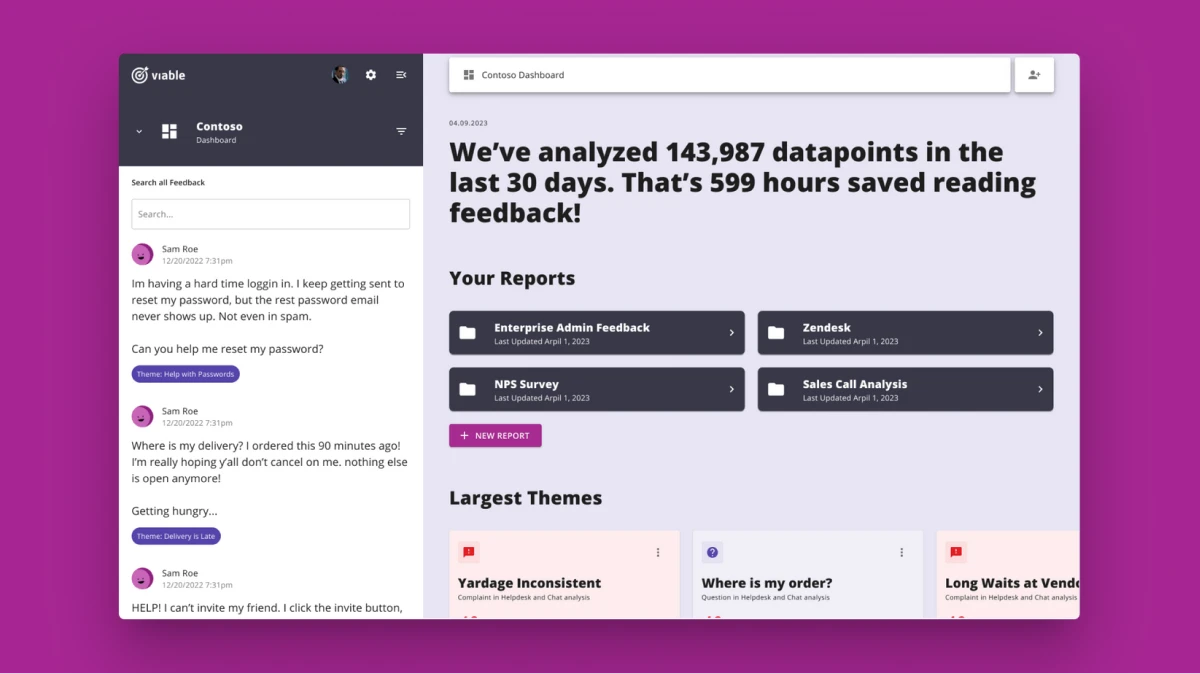
Viable’s platform makes it effortless for customers to extract insights from their unstructured data in platforms like Zendesk, Intercom, Gong, and more through their seamless integrations, continuous syncing, and automated analysis\. In just a few clicks, the platform categorizes data into themes, and provides a week\-over\-week analysis to help customers understand the context behind their data, churn risk, and even the user profiles of those delivering that specific feedback\. Viable's customers can also ask the AI more complex questions about their data and receive insights based on the relevant data set\.
Viable's customers have[saved nearly 1,000 hours per year\(opens in a new window\)](https://www.askviable.com/blog/how-viables-data-analysis-saves-latchs-product-team-936-hours-a-year), reduced support ticket volumes, and decreased customer churn since implementing their insights\. “With Viable, we've been able to analyze unstructured data on a scale that was previously impossible,” says Kalie Bishop, VP of Customer Support at[Sticker Mule\(opens in a new window\)](https://www.askviable.com/blog/sticker-mule-case-study)\. “Previously, we depleted valuable resources manually reviewing, tagging, and analyzing qualitative feedback\.”
> “We’ve revolutionized our approach, using Viable’s powerful insights to swiftly identify areas of improvement and save our managers hundreds of hours\.”
Kalie Bishop, VP of Customer Support at Sticker Mule
Viable has become an essential tool for businesses that want to make data\-driven decisions based on the entirety of their data, not just easy\-to\-measure quantitative KPIs\. With GPT‑4's advanced capabilities, Viable is able to deliver insights that are accurate, nuanced, and actionable, helping their customers stay ahead of the competition\.
## Related articles