@OpenHandsDev: Running one coding agent is a developer workflow. Running agents across an organization is an infrastructure challenge.…
Summary
OpenHands Enterprise adds new features for organizational management of coding agents, including secrets sharing, usage tracking, OAuth for MCP servers, and automation oversight.
View Cached Full Text
Cached at: 09/30/26, 02:04 AM
Running one coding agent is a developer workflow. Running agents across an organization is an infrastructure challenge.
New in OpenHands Enterprise: • Org-level secrets • Usage + budget visibility • OAuth for MCP servers • Org-wide automation management • Git Sync for automations
More visibility and control as agents move from individual sessions to always-on systems. Read the blog for more details on the latest in OpenHands Enterprise: https://hubs.ly/Q04yBlvK0
What’s New in OpenHands Enterprise: More Visibility, Governance, and Control
What’s New in OpenHands Enterprise
As AI agents move from individual developer workflows to shared, always-on systems, organizations need more visibility and control over how those agents operate.
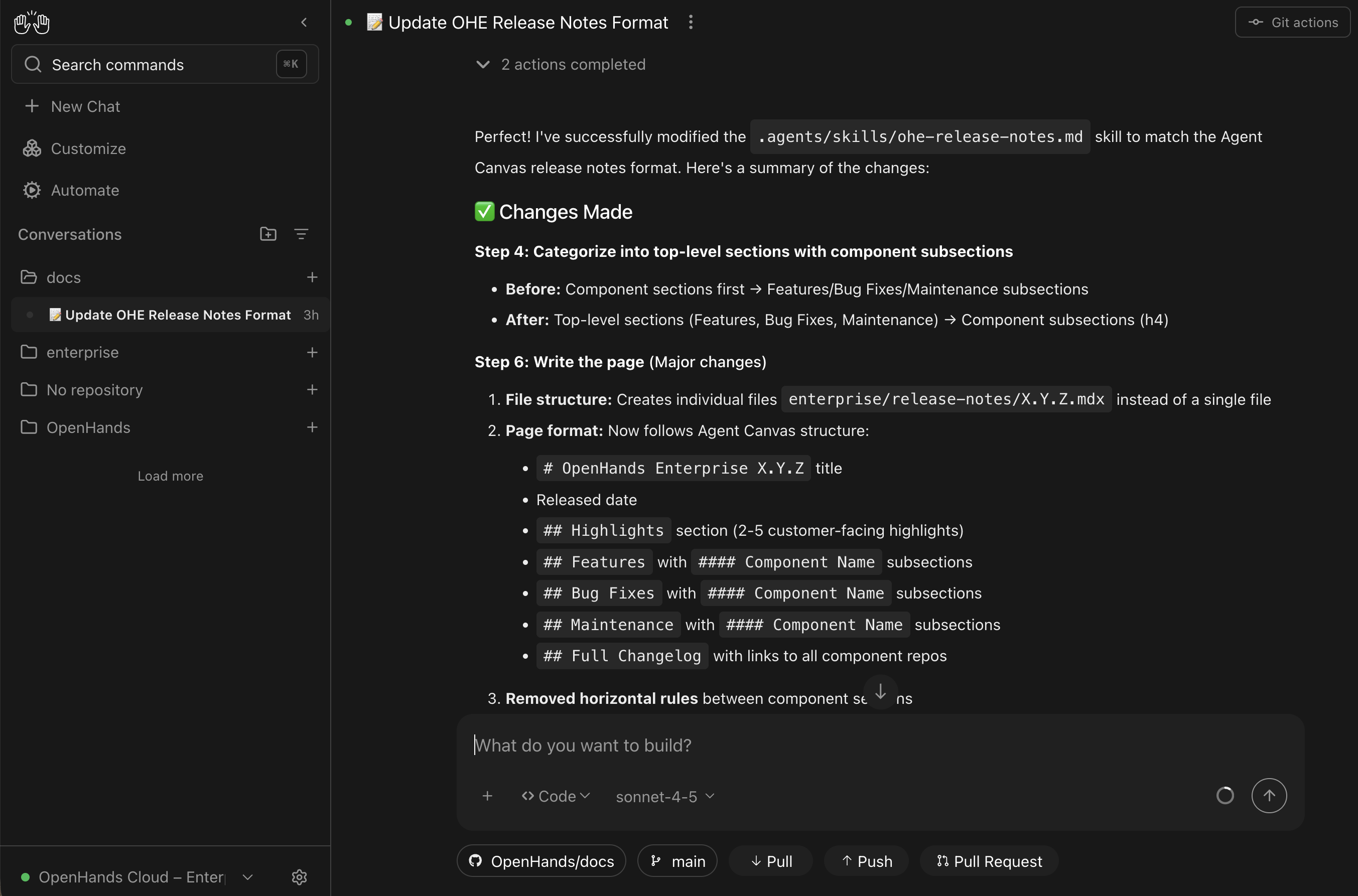
The latest OpenHands Enterprise release adds new capabilities for managing credentials, usage, integrations, and automations across your organization, along with a refreshed experience aligned withAgent Canvas.
Here are the highlights:
A refreshed OpenHands Enterprise experience
OpenHands Enterprise now features an updated interface aligned with the OpenHands Agent Canvas experience, making it easier for developers and administrators to navigate conversations, configuration, and organizational settings.
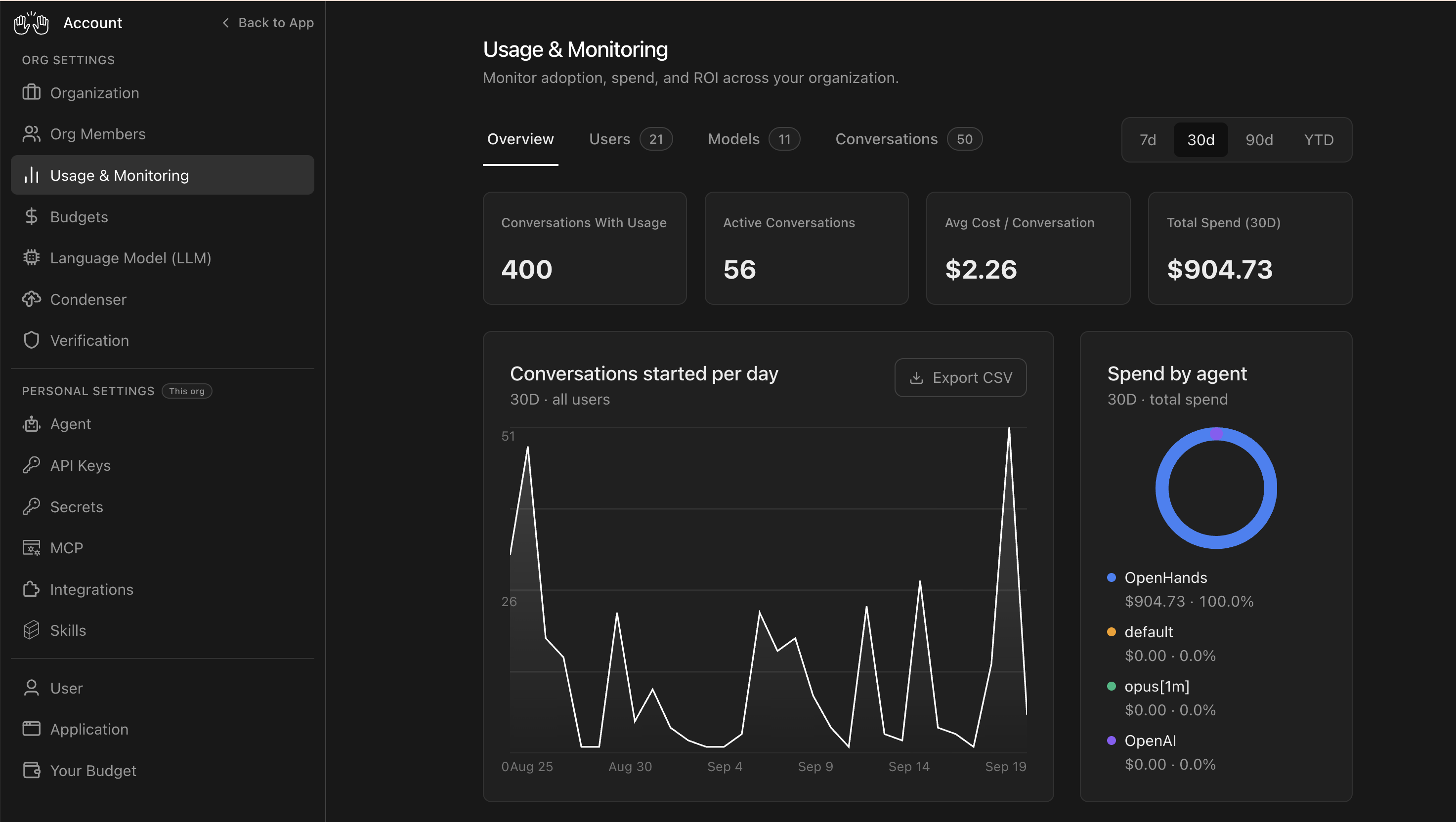
The redesigned Settings experience is available from the gear icon in the lower-left corner, providing a clearer home for managing OpenHands Enterprise.
 ## Share secrets securely across your Organization
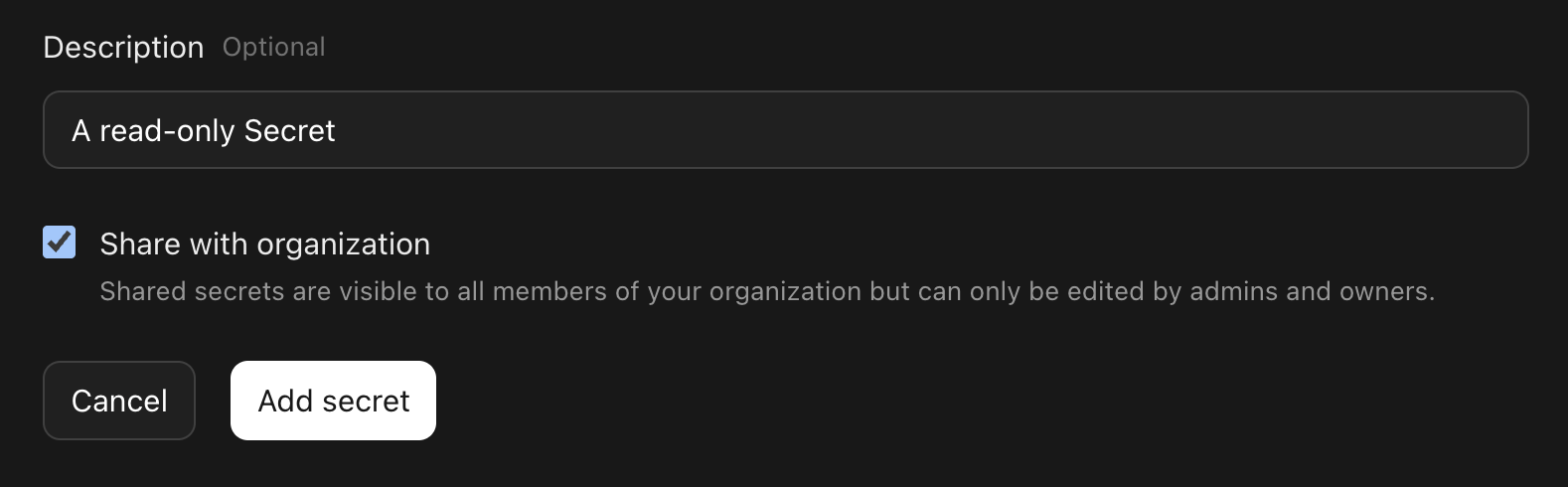
Administrators can now configureOrganization-scoped Secretsthat can be securely shared across users and workflows.
For example, an administrator could provide a shared, read-only PostHog API key that developers can use without requiring every user to configure their own credentials.
Organization Secrets are available underSettings > Secrets.
 ## Understand your usage with the “Your Budget” Dashboard
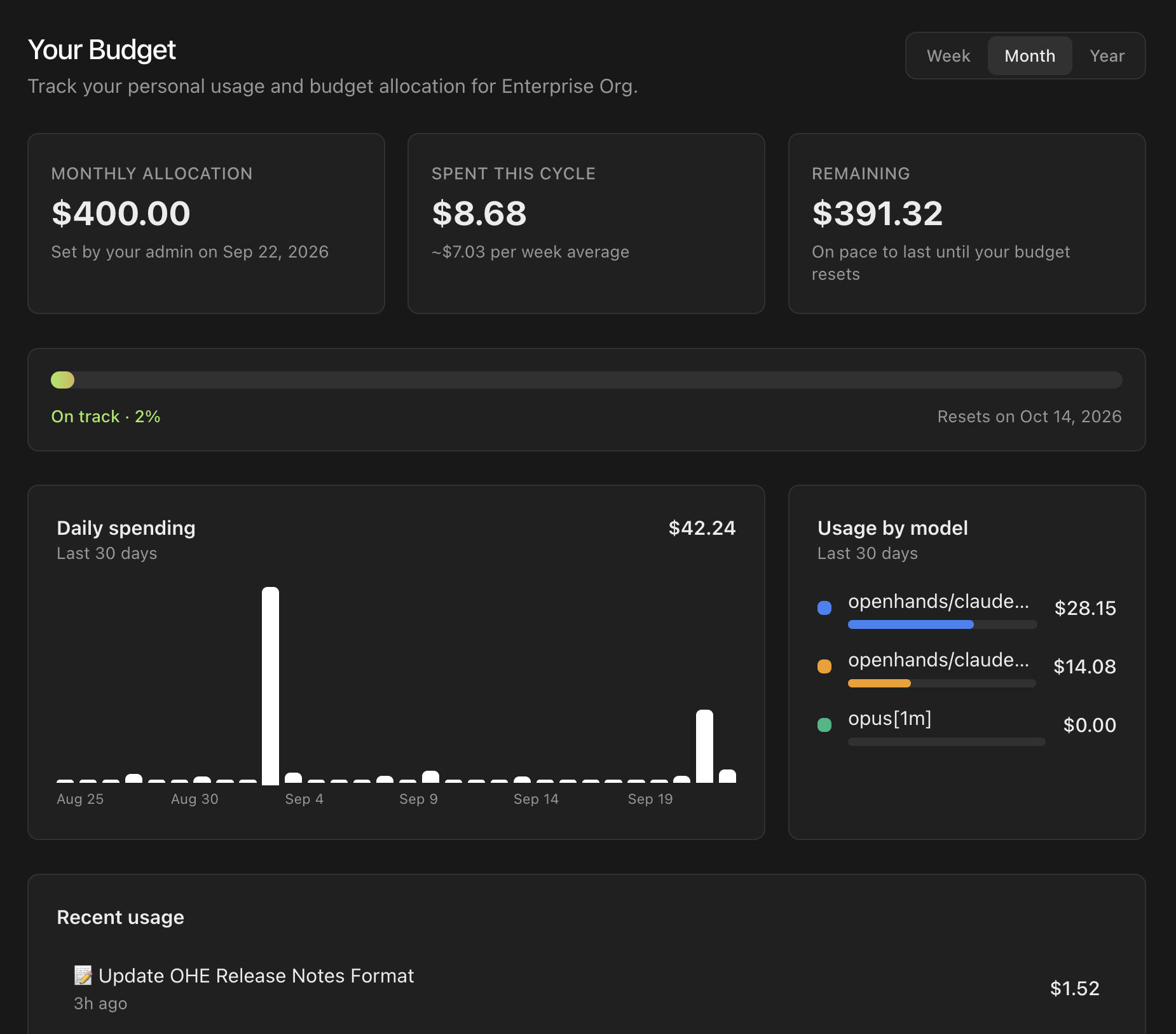
Organization members can now see detailed information about their OpenHands usage and how much of their monthly budget allocation they’ve consumed.
Available underSettings > Your Budget, the new dashboard gives users greater visibility into their own spend and helps teams make usage and cost more transparent.
 ## Connect OAuth-enabled MCP servers with your own identity
OpenHands Enterprise now supports OAuth authentication for MCP servers.
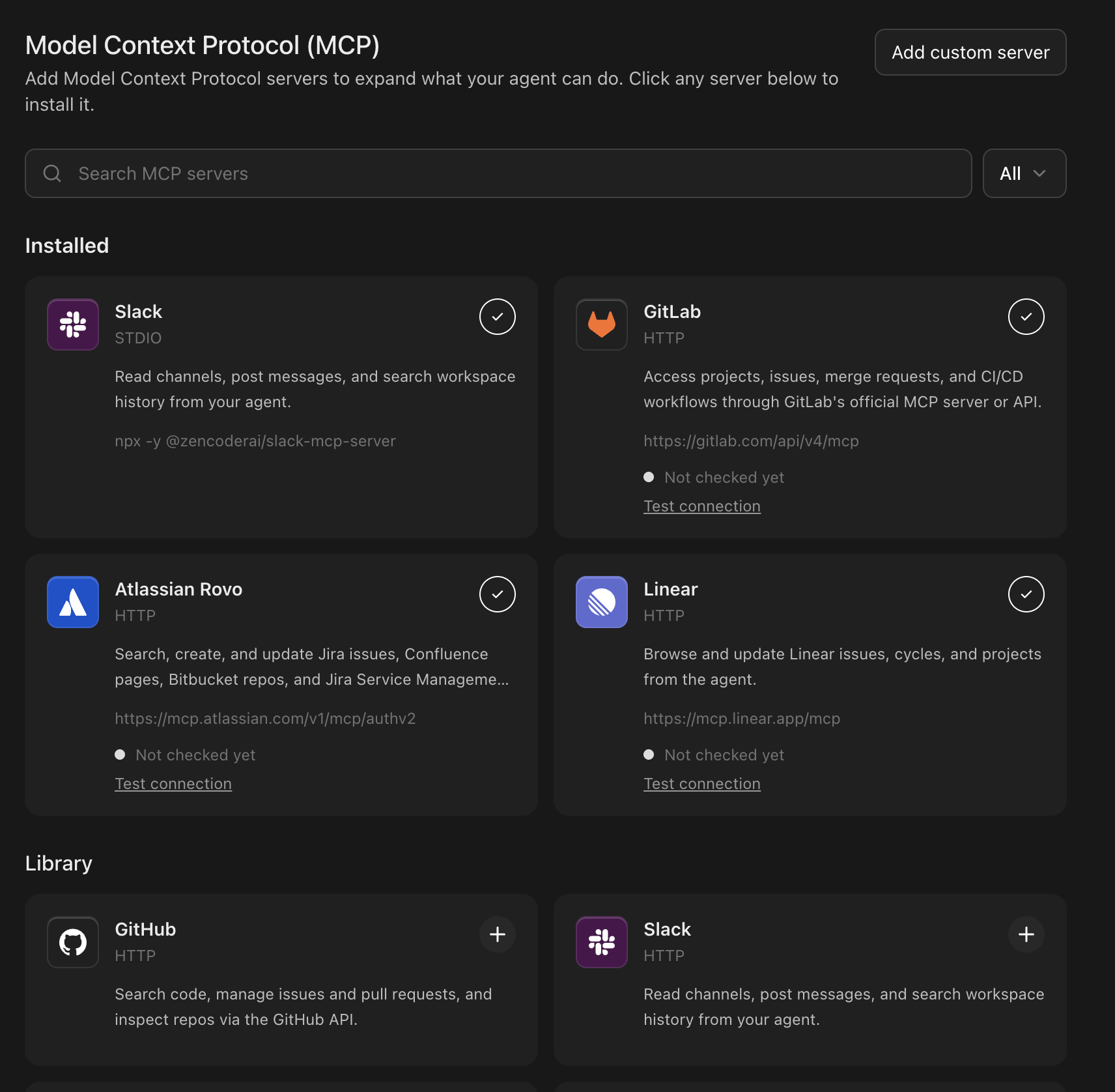
Users can connect to supported systems using their own identity instead of manually configuring credentials. OpenHands Enterprise also includes a catalog of popular OAuth-enabled MCP servers, including GitLab and Atlassian Rovo, underCustomize > MCP Servers.
Once connected, these MCP servers can be used directly within OpenHands conversations, making it easier for agents to securely interact with the tools developers already use.
 ## See and manage the Automations across your Organization
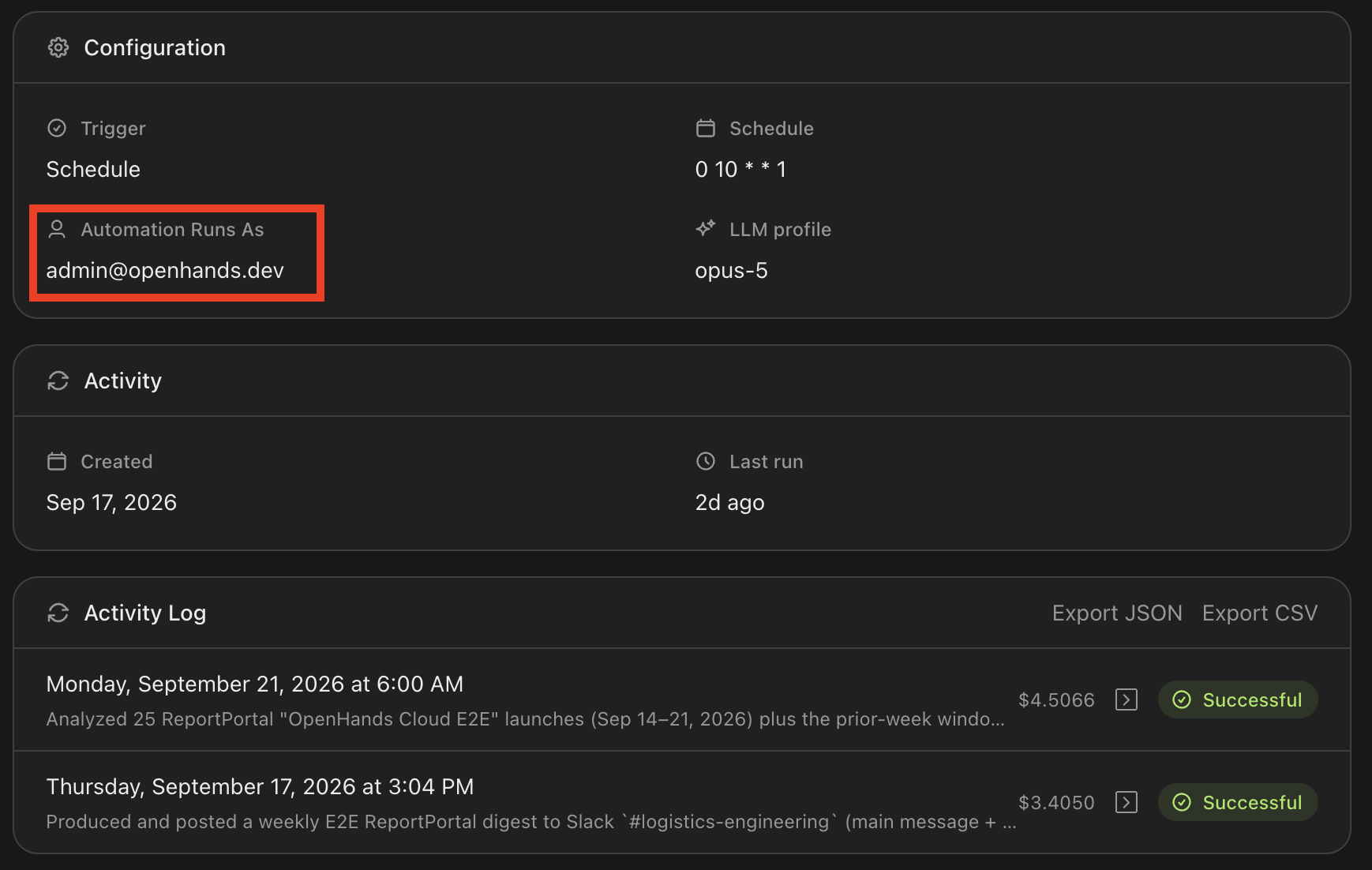
Automations are now visible across an OpenHands Enterprise Organization.
Organization members can see Automations created by other users, and which user identity each Automation runs as. This gives teams a clearer picture of the background workflows powering their agentic SDLC.
It also gives administrators more control over organizational automation, including the ability to disable or delete workflows that are no longer needed.
 ## Manage Automations as code with Git Sync
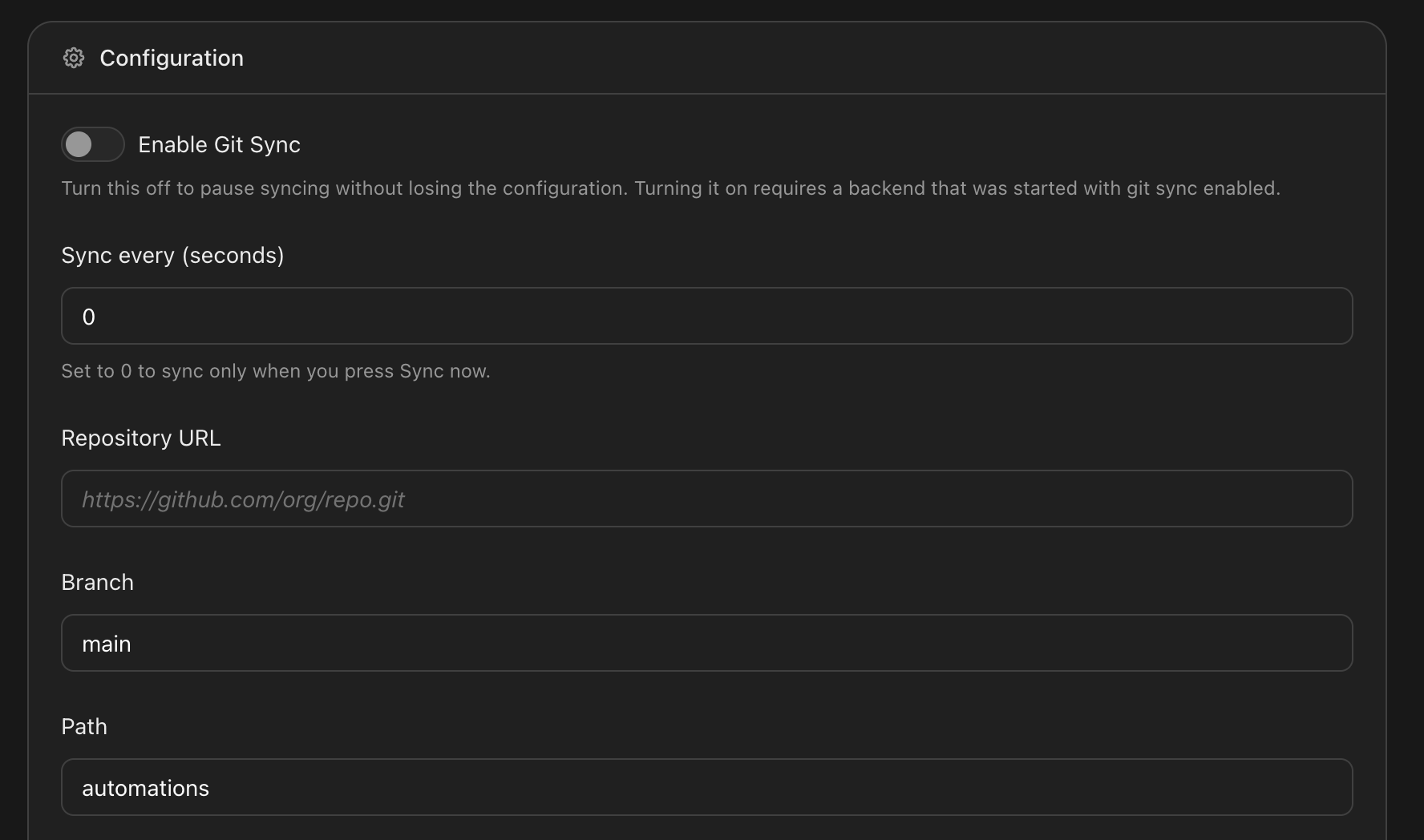
Administrators can now sync OpenHands Automations with a Git repository.
Git Sync provides version history and an off-host backup for Automations while enabling teams to manage changes through familiar Git workflows. Automation updates can be reviewed through pull requests before being deployed, bringing the same review and governance practices used for code to agentic workflows.
Admins can configure this feature underAutomations > Git Sync.
 ## Building the control plane for the agentic SDLC
As organizations move from individual coding-agent sessions toward shared, always-on agentic workflows, they need more than just capable agents. They need visibility into what is running, control over credentials and spend, and governance over how agents interact with enterprise systems.
These updates continue expanding OpenHands Enterprise as the control plane for organizations building and operating an agentic SDLC.
Ready to scale agent workflows across your organization?Request a demoto learn how OpenHands gives your team centralized control over automations, access, and usage.
Similar Articles
@OpenHandsDev: Running a single agent is straightforward. Running hundreds across an organization requires a system. We just launched …
OpenHandsDev launched the Agent Control Plane, a system for controlling, observing, and scaling hundreds of AI agents across an organization.
@OpenHandsDev: Running an AI agent on your laptop is the easy part. Scaling agents across teams, repositories, and workflows requires …
An interview with OpenHands CEO Robert Brennan on scaling AI agents from personal laptops to enterprise infrastructure, covering automation, governance, cost control, and model flexibility.
@svpino: Using managed agents is perfect for running coding agents anywhere in the world. The beauty of this: • You can resume a…
Discusses the benefits of using managed agents for running coding agents globally, highlighting features like session resumption, forking, parallel execution, and environment reuse, with examples using tools like Claude Code and Codex.
@OpenHandsDev: "dev tools must be open source" This blog is making the rounds on Hacker News, and we agree wholeheartedly. https://blo…
OpenHands shares a blog post arguing dev tools must be open source, highlighting the concept of 'long-running forks' where agents nightly merge upstream changes, and demonstrates using OpenHands Agent Canvas automations for this.
Running coding agents on 2+ machines taught me the hard part isn't the agents, it's the control plane
Running coding agents across multiple machines reveals that managing the control plane is more challenging than the agents themselves, offering insights into distributed agent orchestration.