@GoogleDeepMind: Together with scientists around the world, our models and tools are helping make disease more detectable, treatable, an…
Summary
Google DeepMind highlights how its AI models and tools—including AlphaFold and AlphaGenome Atlas—are helping scientists worldwide make diseases more detectable, treatable, and preventable, from drug repurposing to mapping genetic variants linked to aging.
View Cached Full Text
Cached at: 10/16/26, 10:40 AM
Together with scientists around the world, our models and tools are helping make disease more detectable, treatable, and preventable. 🧬
From pinpointing rare genetic variants to speeding up drug discovery, here’s how we’re helping turn lab breakthroughs into real-world care → https://t.co/pSGAGqwOSx
Applying technology to understand and treat disease
Source: https://blog.google/innovation-and-ai/technology/health/ai-health-research/?utm_source=x&utm_medium=social&utm_campaign=&utm_content= In collaboration with scientists and research partners, Google is helping to make disease more detectable, treatable, and preventable — with the goal of improving health outcomes.

Your browser does not support the audio element.
Listen to article
[[duration]] minutes
This content is generated by Google AI. Generative AI is experimental
Google’s health research and tools span from fundamental cellular discovery to laboratory analysis and patient impact. Over the last five years, Google teams have published 90 peer-reviewed research papers about understanding and addressing diseases, accumulating more than 90,000 citations. And building on our vision for howtechnology can accelerate science to improve lives, we’re collaborating with clinicians, academic institutes, and researchers to ensure discoveries make it out of the lab to benefit patients. Here is how our efforts are helping to advance medical research and public health solutions.
Decoding the mechanics of disease
AlphaGenome Atlas is the most comprehensive catalog of predictions for how single-letter variant changes in the human genome affect molecular biology.
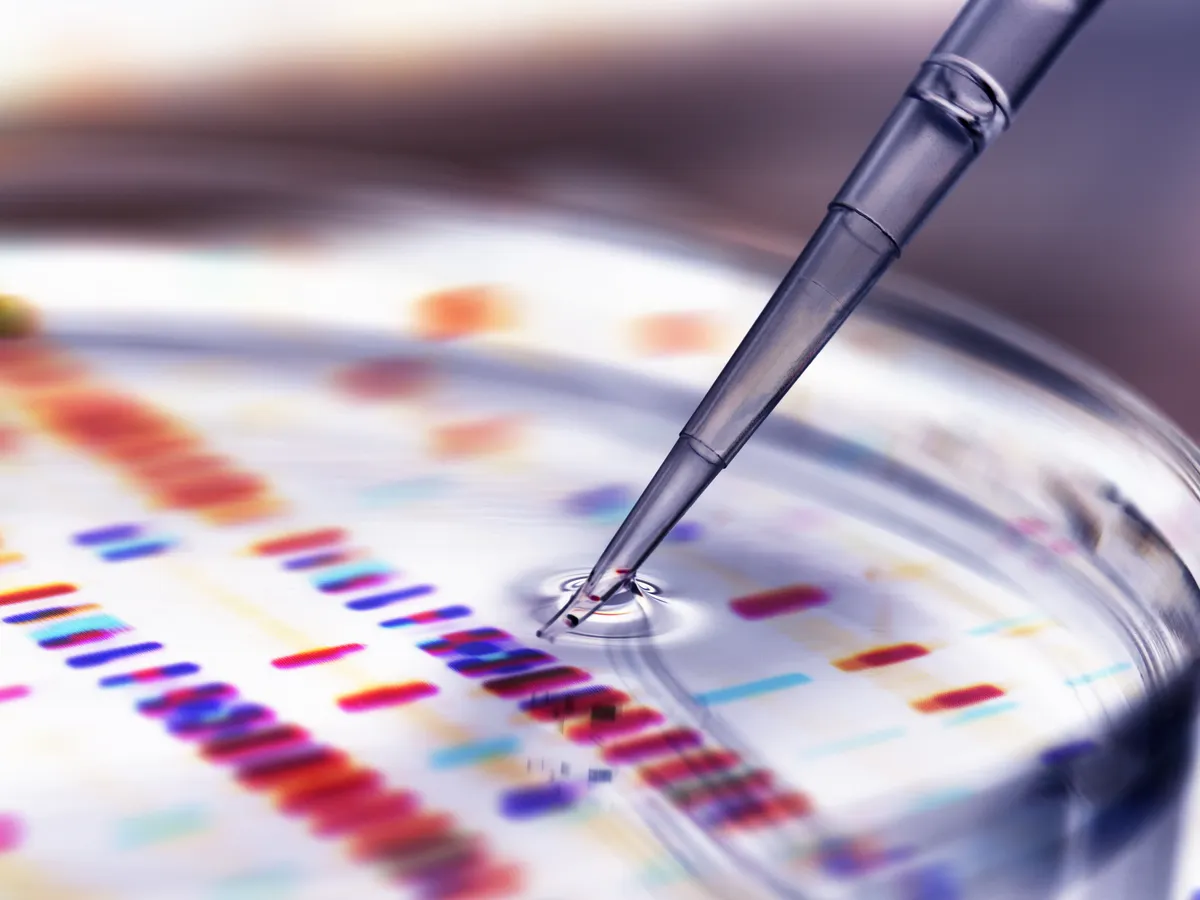
To effectively treat an illness, it helps to understand how it operates at the molecular, genetic, and cellular levels. Our early-stage biology models act as collaborative research tools for scientists, revealing nature’s hidden mechanics and advancing medical discoveries.
- **Accelerating drug discovery:**Researchers at the Institute for Global Health, Barcelona, usedAlphaFoldto virtually screen 30,000 compounds for antiparasitic activity against Chagas disease, a neglected tropical illness that affects roughly 8 million people and can lead to life-threatening complications if left untreated. This research helped the Institute identify two FDA-approved drugs that could be repurposed for Chagas, expediting time-to-treatment.
- **Mapping genetic variants linked to aging:**Identifying which rare genetic changes are linked to specific diseases is challenging because the volume of non-impactful mutations creates “background noise.” Researchers at the University of Exeter usedAlphaGenome Atlasto search through genomic data from over 54,000 individuals, pinpointing specific variants that drive the abundance of critical proteins circulating in the human body, including PLA2G7 (linked to aging) and EGLN1 (a vital cellular oxygen sensor).
- **Reconstructing the brain at nanoscale:**In partnership with Harvard’s Lichtman Lab, wereconstructed a human brain fragmentat nanoscale resolution and made the data openly available viaNeuroglancer. We additionally mapped the brains of model organisms including thefly,larval zebrafish, andsongbird. These neural mapping resources enable researchers to advance their study of brain function.
Accelerating tools for medical solutions
Visual map of proteins developed with the support of AlphaFold.
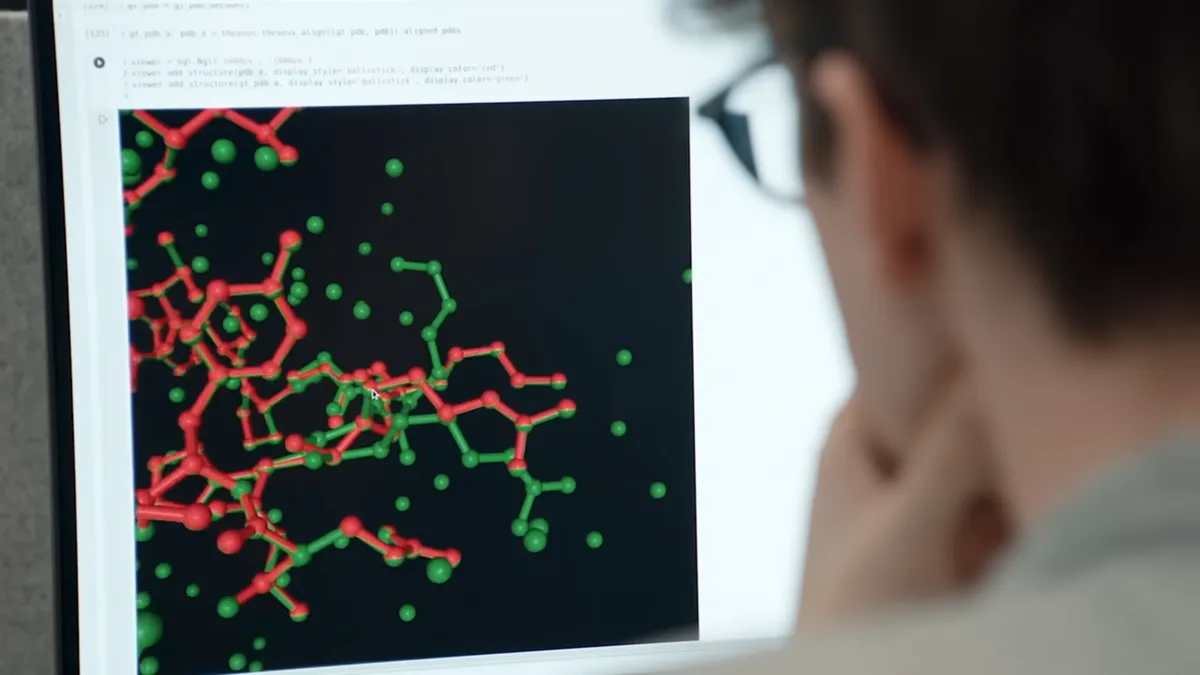
The lab is where biological discovery is validated, engineered, and turned into potential medical and public health solutions. Our models have replaced slow, iterative processes with systems that can process large amounts of data quickly and accurately.
- **Supporting genetic diagnoses with ultrarapid genome sequencing:**In collaboration with Stanford University School of Medicine, we usedDeepVariantandDeepConsensusin a clinical trial to help determine the cause of genetic disease in time-critical cases. The program assisted inenabling life-saving interventionsby achieving genetic diagnosis with whole genome sequencing in less than eight hours, an unprecedented achievement also recognized with aGuinness World Record.
- **Designing custom enzymes from scratch:**We introducedAlphaProtein Novo, a machine learning pipeline for creating new-to-nature enzymes from first principles. In lab tests, it successfully designed custom enzymes to synthesize key drug motifs, and others to degrade toxic environmental plastics under extreme conditions — demonstrating the ability to design functional proteins that can go beyond what is currently known in nature.
- **Supporting proactive public health initiatives:**A community’s health isdeeply connectedto its geography. We are using ourGoogle Earth AImodels in combination with environmental, weather, mobility, and other data tohelp public health leadersforecast disease outbreaks and deliver care to vulnerable communities. In new research fromWHO AFROand the DRC’sINRB, conversational geospatial models replaced weeks of manual coding to help identify Ebola exposure and transmission risks sooner — allowing local responders to proactively deploy mobile laboratories.
Supporting medical providers with machine learning models
New mammography screening systems can help to catch historically missed interval cancers and reduce specialist reading workloads.
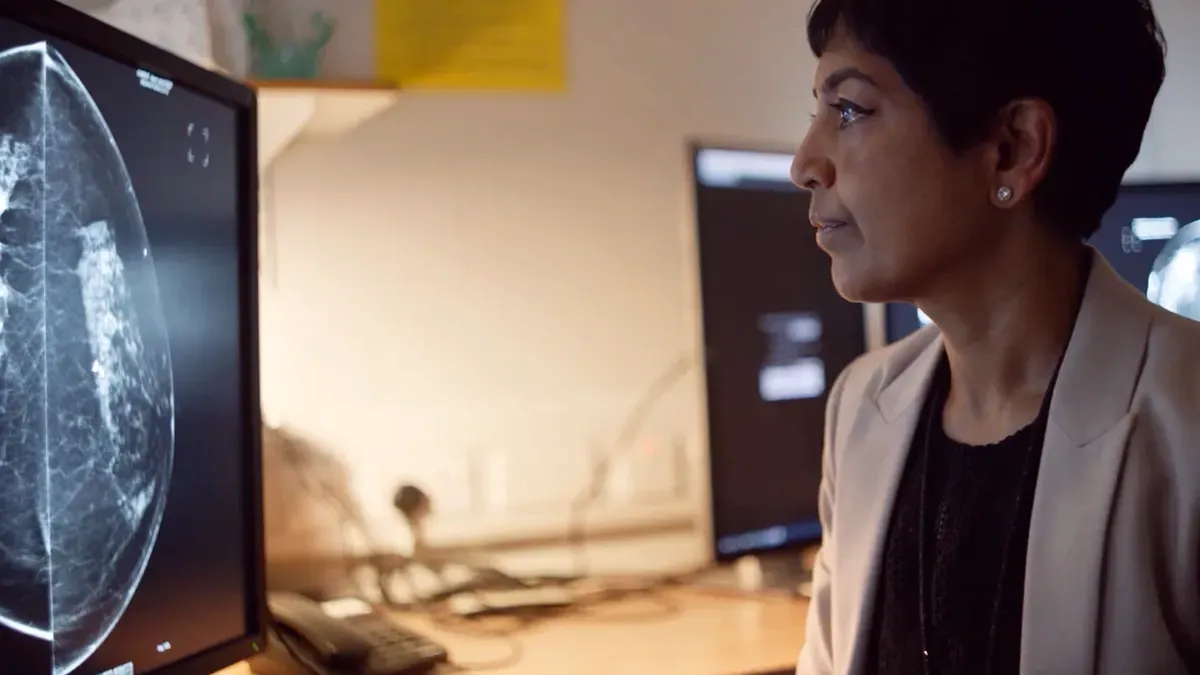
A medical breakthrough only matters if it can help real people. Our research demonstrates that machine learning models can help support disease detection as well as alleviate the administrative workload so providers can focus on care.
- **Flagging historically missed cancer signatures:**In apairofstudiespublished inNature Cancerin collaboration with Imperial College London and the UK’s National Health Service (NHS), we evaluated a mammography screening system across 125,000 women. The systemcaught25% of historically missed interval cancers while showing the possibility of reducing specialist reading workloads by up to 40% — which could help provide crucial relief to healthcare systems facing severe radiologist shortages.
- **Uncovering hidden pediatric leukemia mutations:**When applied by Children’s Mercy Hospital to previously sequenced real-world childhood leukemia cases,DeepSomaticconfirmed all known variants while detecting 10 previously missed mutations — despite the challenge of working with a tumor-only sample. DeepSomatic is publicly available and has the potential to inform clinical judgments around patient risk and targeted treatments.
- **Predicting global flu surges:**A Googleflu forecasting modelwas ranked #1 by the Centers for Disease Control (CDC) for predicting flu-related hospital admissions during the 2025–2026 season. Developed using ourEmpirical Research Assistancetool, the model outperformed 38 other systems to accurately match observed hospitalizations, showing how the technology can help public health officials anticipate demand for medical services and better prepare for seasonal outbreaks.
Better health within reach for everyone
Transforming health requires scientists, researchers, and institutions working hand-in-hand. That’s why we equip the science community with the advanced models and open-access platforms to fuel breakthrough research — along with the philanthropic funding and computing power they need to apply that research.
Through Google.org, we’re supporting organizations like theInfectious Disease Institute at Makerere Universityto forecast malaria drug resistance mutations with AlphaFold and AlphaMissense, and the University of Pennsylvania, using AlphaProteo and AlphaFold to help design novel cellular therapies that can augment the treatment of solid tumors and complex diseases. In 2026, Google.org has provided over $60 million to organizations around the world that are applying advanced models to transform how we understand and treat diseases.
By meeting disease at every stage, we can turn the most intractable human health challenges into actionable solutions, helping people everywhere live longer, healthier lives.
Get the latest news from Google in your inbox
Sign up for our newsletters with product updates, event information, special offers, and more.
Your information will be used in accordance withGoogle’s privacy policy.You may opt out at any time.
About the Authors

VP, Google & GM, Google Research
Yossi Matias is Vice President, Google, and the Head of Google Research. Under Yossi’s leadership, world-class global teams are leading breakthrough research on Foundational Machine Learning & Algorithms, Computing Systems & Quantum Computing, Science, AI for Societal Impact in Health, Climate, Sustainability, Education and Cultural and Behavioral Intelligence. Yossi also leads teams advancing foundational research advancements in Generative AI, including in Factuality and Efficiency, driving real-world impact and shaping the future of technology.
Read less

VP Science, Google DeepMind & Chief Scientist, Google Cloud
Similar Articles
Google’s Atlas of the human genome could pave the way for new treatments
Google DeepMind releases AlphaGenome Atlas, an AI tool that provides predictive maps of all possible DNA variations in the human genome to accelerate disease research.
‘Solve all diseases,’ you say?
A critical analysis of Google DeepMind CEO Demis Hassabis's claim at Google I/O that AI could 'solve all diseases,' contextualizing the potential of tools like AlphaFold and AlphaGenome while highlighting the gap between scientific promise and public perception.
@GoogleDeepMind: Over the past year, we’ve collaborated with global scientific experts to evaluate the system on complex problems. It as…
GoogleDeepMind collaborated with global scientific experts to evaluate an AI system that identified new targets for liver fibrosis and fresh approaches to ALS, digesting decades of research.
Applying technology to understand and treat disease (1 minute read)
Google 聚合其五年来在医疗健康领域的研究成果,涵盖 AlphaGenome Atlas、AlphaFold 药物筛选、脑科学纳米级重建等,展示了 AI 如何加速疾病检测、治疗与预防。
@GoogleDeepMind: AlphaGenome Atlas is over 30 times larger than the AlphaFold Database. It gives scientists an intuitive way to explore …
AlphaGenome Atlas is a new AI model that expands the AlphaFold database by over 30 times to help scientists explore genetic data more effectively.