Cached at:
09/17/26, 05:45 PM
# The human rights of tomorrow start with the AI choices we make today
Source: [https://www.eurac.edu/en/blogs/imagining-futures/the-human-rights-of-tomorrow-start-with-the-ai-choices-we-make-today](https://www.eurac.edu/en/blogs/imagining-futures/the-human-rights-of-tomorrow-start-with-the-ai-choices-we-make-today)
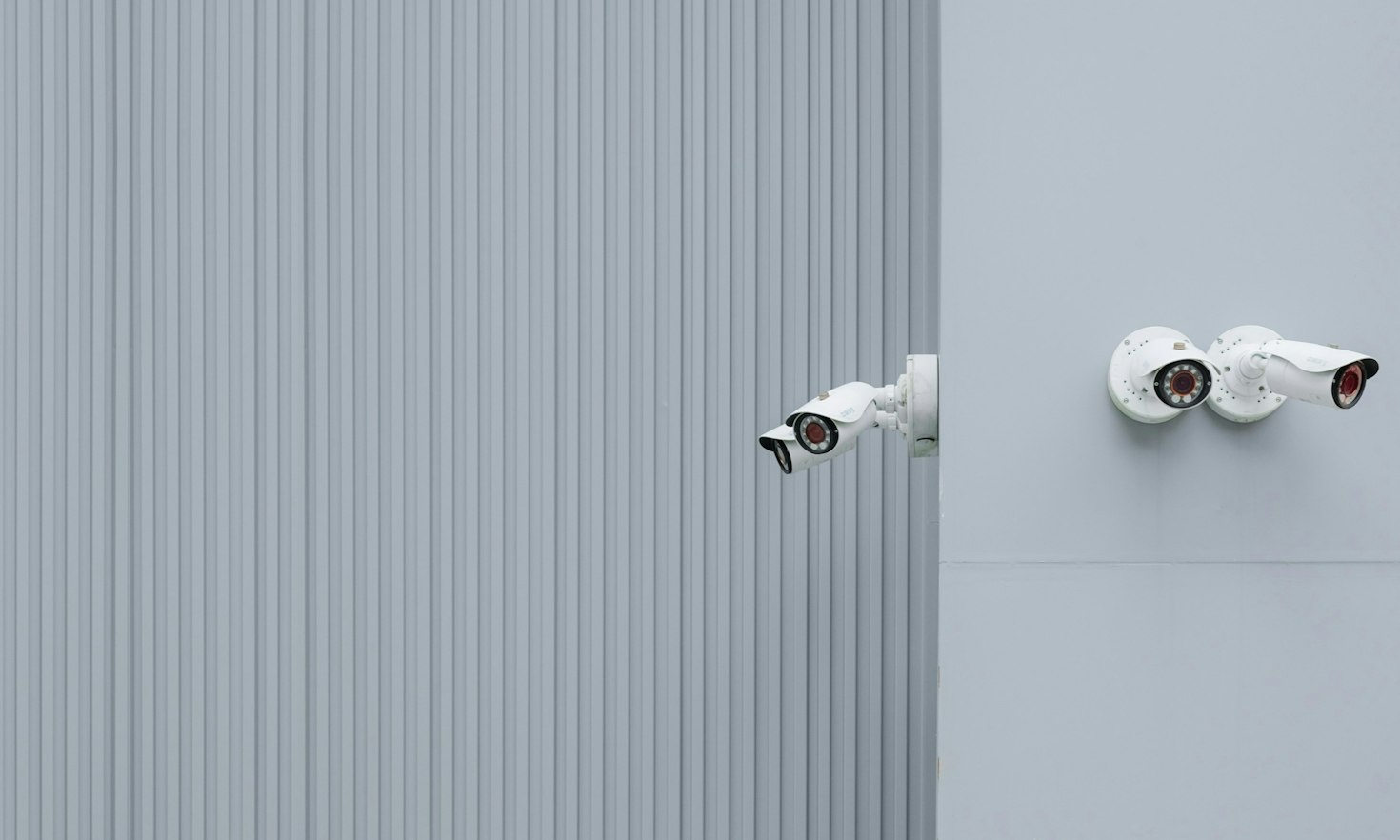
Credit:UnsplashH&COAll rights reserved
The greatest danger to future democracies powered by AI is that human rights violations may never feel like violations at first\. They arrive quietly, disguised as efficiency and convenience\.
Somewhere in the Netherlands, between 2014 and 2020, ordinary people went about their lives not knowing their government had quietly decided they were suspicious\. No notice\. No explanation\. Just a score\. According to[AlgorithmWatch](https://algorithmwatch.org/en/syri-netherlands-algorithm/),*SyRI*risk profiling system was built to catch welfare fraud, cross\-referencing tax, employment, and housing records to identify suspicious cases\. Deployed primarily in low\-income neighborhoods, it recast poverty itself as a risk indicator, treating where you lived and how little you had as evidence of wrongdoing\. When the court of The Hague halted*SyRI*in 2020, it ruled that the system violated Article 8 of the European Convention on Human Rights, finding the legislation insufficiently transparent and lacking adequate safeguards against privacy violations\.
## When efficiency becomes a human rights problem
> AI, once used in public institutions, does not merely execute decisions\. They gradually reshape what decisions looks like, who gets to make them, what evidence is considered legitimate, and how much room remains for the people affected to push back\. Michaela Jamelska
## Who decides who looks suspicious?
> When a public institution discovers bias in a system affecting a million people annually, and its first response is to suppress disclosure, it is making a calculation that protecting its infrastructure matters more than correcting harm to the people it serves\. It is a human rights failure not only by AI, but by the people who manage it\. Michaela Jamelska
## The right to be unreadable
> Democratic societies have always depended on a degree of ambiguity about people where we allow individuals to contradict themselves, to fail, to start again, without immediately becoming administratively suspicious\. AI operates against that principle\. Michaela Jamelska
> Being answerable for an AI system does not mean promising that the system will behave perfectly all the time\. It means knowing who has the authority to notice when something is going wrong\. Michaela Jamelska
Human rights governance often now operates as a reactive system\. Anticipating what is yet to come matters precisely because, by the time AI has changed public administration, labor markets and our whole economy, the social norms those systems carry may already have become the new baseline; invisible, assumed, and difficult to challenge\. That transformation is subtle because it arrives through convenience, efficiency, and optimization\. The language sounds harmless, but psychologically, it changes the moral relationship between institutions and individuals\.
## Making responsibility real
#### The UNESCO Chair Fellowship

#### Michaela Jamelska
### Making research visible\.
Find the connected experts, projects, publications, and research areas behind this blog post\.

Eurac Research is a private research center based in Bolzano \(South Tyrol\) with researchers from a wide variety of scientific fields who come from all over the globe\. Together, through scientific knowledge and research, they share the goal of shaping the future\.