@FrancoisChauba1: Want to learn what is SOTA right now in Robotics from phds at Stanford, Physical Intelligence, Waymo, http://Rerun.io, …
Summary
A tweet promoting learning about state-of-the-art robotics from researchers at Stanford, Physical Intelligence, Waymo, and YC startups, linking to Rerun.io's open source SDK and data infrastructure for physical AI.
View Cached Full Text
Cached at: 08/10/26, 11:42 PM
Want to learn what is SOTA right now in Robotics from phds at Stanford, Physical Intelligence, Waymo, https://t.co/Cg1jQdPa8a, and YC Startups?
The Data Layer for Physical AI
Source: https://rerun.io/
Open source SDK. A single toolchain to log, transform, query, view, and train on multi-rate, multimodal data.
A flexible framework to build with rather than a platform you can’t change.
pip install rerun-sdk
rerun
Visualize everything
Review datasets, debug detail-level issues, and extend with your own views and tools for every stage of the pipeline.
Query and transform
Full dataframe or SQL queries over any robotics data. Extend with post-processing or annotations as easily as adding columns to a table.
Log, store, and convert
Store multi-rate, multimodal data as column-chunks in rrd files. Either log directly or easily convert from any other format.
Open Source Stewardship
We’re an active contributor to the open source projects we all love and rely on.
Rerun Hub
Infrastructure that powers your data loop
The production backend for the Rerun data layer. Catalog, byte-range indexing, and retrieval that turns your object stores into a queryable, streamable foundation. Run transforms on the edge or close to the data.
Query
Query into your recordings with SQL
Run any SQL or dataframe query across your catalog, down into the columns, time ranges, and values inside your recordings, not just their metadata.
Transform
Refine your data without copies
Add derived columns and evolve schemas without breaking history. You run the transforms with the SDK; Hub keeps the derived data and your raw recordings organized together.
Train
Train without an export step
Express a dataset mix as a query and stream it to your GPUs. The dataloader is column-aware and video-codec-aware, so you train directly on your recordings.
Share
Everyone works from the same data
One viewer, the same recordings, shared across the team. Explore, annotate, and trace a failure back to the data that caused it.
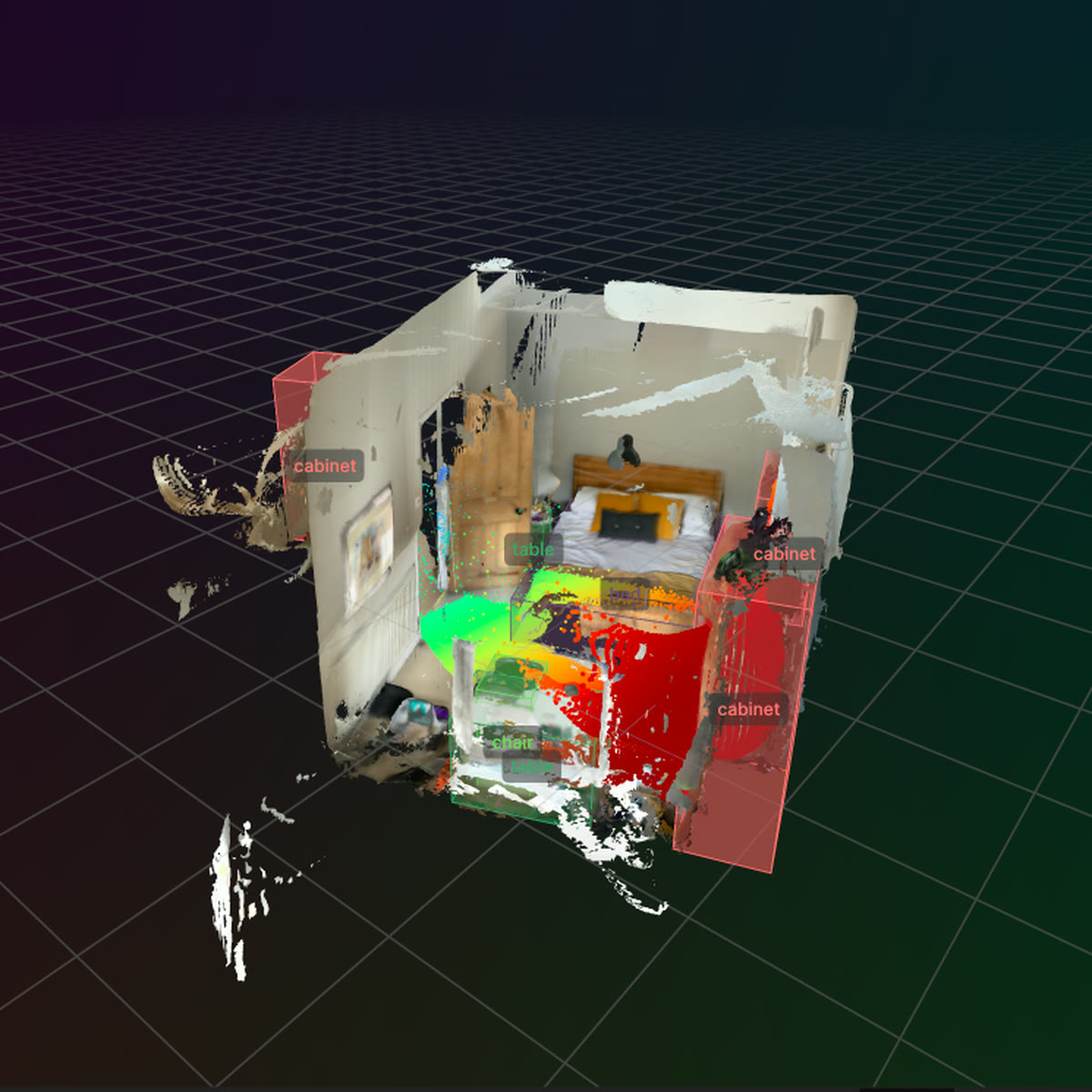
News ## Spotlight: 3D reconstruction is a data layer problem3D reconstruction runs on multimodal, multi-rate data, and handling that data is most of the work. This is a worked example of what Rerun’s data layer removes from a real project: all 5,015 ARKitScenes scans converted into recordings that the viewer, the dataframe API, and the PyTorch dataloader read directly, no export step in between.
https://rerun.io/The data layer for physical AI. From collection to training.
- https://github.com/rerun-io/rerun
- https://discord.gg/PXtCgFBSmH
- https://twitter.com/rerundotio
- https://www.linkedin.com/company/rerun-io/
- https://www.youtube.com/@rerun-io
Subscribe to Release notes
Subscribe to our release notes to hear about new features as soon as they drop.
© 2026 Rerun Technologies AB. All rights reserved.
Y Combinator (@ycombinator): This week’s Paper Club is all about robotics. Every year for the last decade, someone has promised that the era of robotics is just around the corner. But we’re still waiting.
So we gathered a bunch of the top researchers working in AI and robotics to present the latest findings
Similar Articles
@retr0sushi_: a really concise and cool blog on the current landscape of robotics i found recently and finished reading just now : ht…
A tweet recommending a concise blog post about the current landscape of AI robotics, with a link to the blog.
@FinanceYF5: 1/ If every time you see a new robot video, you're sighing "How did it suddenly progress so fast," it means you've star…
A tweet thread highlights five X accounts to follow for early signals in robotics research, noting they track developments around key projects like GR00T, Physical Intelligence, ALOHA, and LeRobot roughly six months ahead of the mainstream.
@yunta_tsai: If you’d like to bring up an inference stack on the coolest robotic prototypes, please join our systems and integration…
A tweet from @yunta_tsai inviting people to join Tesla_AI's systems and integration team for working on inference stacks on robotic prototypes.
@kshenster: Three approaches are racing to build robotics' data flywheel: foundation models (@physical_int @GeneralistAI @SkildAI),…
This article analyzes three competing approaches in robotics development—foundation models, deployment-first, and full-stack—and suggests that each can lead to significant companies in the large robotics market.
@Alacritic_Super: Want to learn Robotics from the world's best universities? Start with these free resources: • MIT OpenCourseWare – Intr…
A Twitter post compiles free robotics course links from top universities including MIT, Stanford, and Carnegie Mellon, providing a curated list for learners.