@GoSailGlobal: Claude Code 插件这周出了一个 14.7K star 的爆款 Understand-Anything · 它的钩子很狠 「你刚加入一个新团队,代码 200,000 行,从哪开始?」 · 它做的事 把整个 codebase 跑成一…
摘要
Understand-Anything 是一个 Claude Code 插件,通过多 Agent 流水线将代码库转化为可交互的知识图谱,帮助开发者快速理解大型项目,支持依赖分析、Diff Impact Analysis 等功能。
查看缓存全文
缓存时间: 2026/05/25 04:42
Claude Code 插件这周出了一个 14.7K star 的爆款 Understand-Anything
· 它的钩子很狠
「你刚加入一个新团队,代码 200,000 行,从哪开始?」
· 它做的事
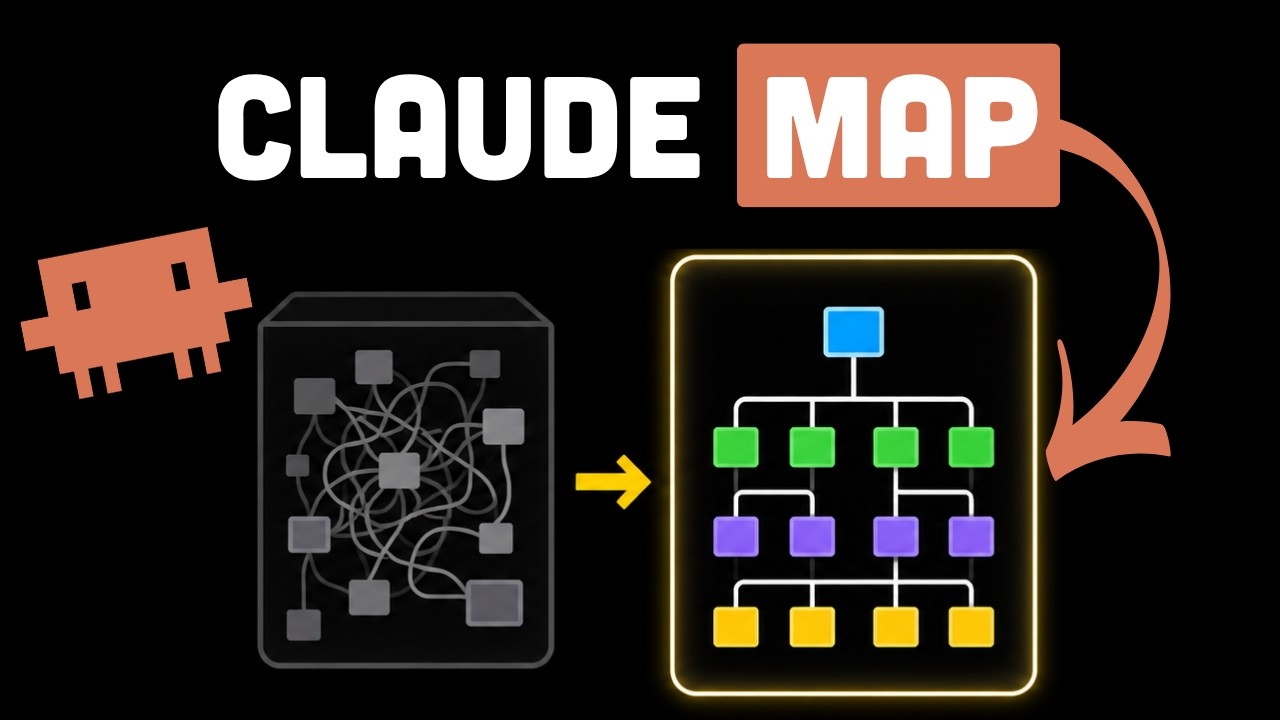
把整个 codebase 跑成一张知识图谱,每个文件、函数、类、依赖都是一个节点
打开 dashboard 就是一张可缩放、可搜索、可点开看 plain English 解释的图
· 多 Agent 流水线,5 个 Agent 干活
project-scanner / file-analyzer / architecture-analyzer / tour-builder / graph-reviewer
并发 5,每批 20-30 个文件,只增量分析改过的部分
· 最实用的功能
「Diff Impact Analysis」改一行代码看波及哪些模块
「Guided Tours」按依赖顺序自动生成「正确的阅读顺序」
「Persona-Adaptive UI」给初级开发 / PM / 技术大牛三种详略呈现
· 支持平台 13 个
Claude Code / Cursor / Copilot / Codex / Gemini CLI / OpenCode / OpenClaw / Antigravity / Pi / Vibe / VS Code / Hermes / Cline / KIMI
· graph 本身是 JSON,提交到 repo 之后全队复用
新人 onboarding 之前先 git pull 一份图
· 项目链接:http://github.com/Lum1104/Understand-Anything…
Lum1104/Understand-Anything
Source: https://github.com/Lum1104/Understand-Anything
Understand Anything
Turn any codebase, knowledge base, or docs into an interactive knowledge graph you can explore, search, and ask questions about.
Works with Claude Code, Codex, Cursor, Copilot, Gemini CLI, and more.
English | 简体中文 | 繁體中文 | 日本語 | 한국어 | Español | Türkçe | Русский


💬 Join the Discord community →
Ask questions, share what you've built, get help from the community.
You just joined a new team. The codebase is 200,000 lines of code. Where do you even start?
Understand Anything is a Claude Code Plugin that analyzes your project with a multi-agent pipeline, builds a knowledge graph of every file, function, class, and dependency, then gives you an interactive dashboard to explore it all visually. Stop reading code blind. Start seeing the big picture.
The goal isn’t a graph that wows you with how complex your codebase is — it’s a graph that quietly teaches you how every piece fits together.
✨ Features
Want to skip the reading? Try the live demo in our homepage — a fully interactive dashboard you can pan, zoom, search, and explore right in your browser.
Explore the structural graph
Navigate your codebase as an interactive knowledge graph — every file, function, and class is a node you can click, search, and explore. Select any node to see plain-English summaries, relationships, and guided tours.
Understand business logic
Switch to the domain view and see how your code maps to real business processes — domains, flows, and steps laid out as a horizontal graph.
Analyze knowledge bases
Point /understand-knowledge at a Karpathy-pattern LLM wiki and get a force-directed knowledge graph with community clustering. The deterministic parser extracts wikilinks and categories from index.md, then LLM agents discover implicit relationships, extract entities, and surface claims — turning your wiki into a navigable graph of interconnected ideas.
🧭 Guided ToursAuto-generated walkthroughs of the architecture, ordered by dependency. Learn the codebase in the right order. |
🔍 Fuzzy & Semantic SearchFind anything by name or by meaning. Search "which parts handle auth?" and get relevant results across the graph. |
📊 Diff Impact AnalysisSee which parts of the system your changes affect before you commit. Understand ripple effects across the codebase. |
🎭 Persona-Adaptive UIThe dashboard adjusts its detail level based on who you are — junior dev, PM, or power user. |
🏗️ Layer VisualizationAutomatic grouping by architectural layer — API, Service, Data, UI, Utility — with color-coded legend. |
📚 Language Concepts12 programming patterns (generics, closures, decorators, etc.) explained in context wherever they appear. |
🚀 Quick Start
1. Install the plugin
/plugin marketplace add Lum1104/Understand-Anything
/plugin install understand-anything
2. Analyze your codebase
/understand
A multi-agent pipeline scans your project, extracts every file, function, class, and dependency, then builds a knowledge graph saved to .understand-anything/knowledge-graph.json.
Localized output: Use --language to generate content in your preferred language:
# Generate Chinese content (知识图节点描述和 Dashboard UI)
/understand --language zh

# Supported languages: en (default), zh, zh-TW, ja, ko, ru
The --language parameter affects:
- Node summaries and descriptions in the knowledge graph
- Dashboard UI labels, buttons, and tooltips
- Guided tour explanations
3. Explore the dashboard
/understand-dashboard
An interactive web dashboard opens with your codebase visualized as a graph — color-coded by architectural layer, searchable, and clickable. Select any node to see its code, relationships, and a plain-English explanation.
4. Keep learning
# Ask anything about the codebase
/understand-chat How does the payment flow work?

# Analyze impact of your current changes
/understand-diff

# Deep-dive into a specific file or function
/understand-explain src/auth/login.ts

# Generate an onboarding guide for new team members
/understand-onboard

# Extract business domain knowledge (domains, flows, steps)
/understand-domain

# Analyze a Karpathy-pattern LLM wiki knowledge base
/understand-knowledge ~/path/to/wiki

# Re-run anytime — incremental by default (only re-analyzes changed files)
/understand

# Auto-update on every commit via a post-commit hook
/understand --auto-update

# Scope to a subdirectory (for huge monorepos)
/understand src/frontend
🌐 Multi-Platform Installation
Understand-Anything works across multiple AI coding platforms.
Claude Code (Native)
/plugin marketplace add Lum1104/Understand-Anything
/plugin install understand-anything
One-line install (Codex / OpenCode / OpenClaw / Antigravity / Gemini CLI / Pi Agent / Vibe CLI / VS Code Copilot / Hermes / Cline / KIMI CLI)
macOS / Linux:
curl -fsSL https://raw.githubusercontent.com/Lum1104/Understand-Anything/main/install.sh | bash
# or skip the prompt by passing the platform:
curl -fsSL https://raw.githubusercontent.com/Lum1104/Understand-Anything/main/install.sh | bash -s codex
Windows (PowerShell):
iwr -useb https://raw.githubusercontent.com/Lum1104/Understand-Anything/main/install.ps1 | iex
The installer clones the repo to ~/.understand-anything/repo and creates the right symlinks for the chosen platform. Restart your CLI/IDE afterwards.
- Supported
<platform>values:gemini,codex,opencode,pi,openclaw,antigravity,vibe,vscode,hermes,cline,kimi - Update later:
./install.sh --update - Uninstall:
./install.sh --uninstall <platform>
Cursor
Cursor auto-discovers the plugin via .cursor-plugin/plugin.json when this repo is cloned. No manual installation needed — just clone and open in Cursor.
If auto-discovery doesn’t pick it up, install it manually: open Cursor Settings → Plugins, paste https://github.com/Lum1104/Understand-Anything into the search field, and add it from there.
VS Code + GitHub Copilot
VS Code with GitHub Copilot (v1.108+) auto-discovers the plugin via .copilot-plugin/plugin.json when this repo is cloned. No manual installation needed — just clone and open in VS Code.
For personal skills (available across all projects), run the install.sh above with the vscode platform.
Copilot CLI
copilot plugin install Lum1104/Understand-Anything:understand-anything-plugin
Platform Compatibility
| Platform | Status | Install Method |
|---|---|---|
| Claude Code | ✅ Native | Plugin marketplace |
| Cursor | ✅ Supported | Auto-discovery |
| VS Code + GitHub Copilot | ✅ Supported | Auto-discovery |
| Copilot CLI | ✅ Supported | Plugin install |
| Codex | ✅ Supported | install.sh codex |
| OpenCode | ✅ Supported | install.sh opencode |
| OpenClaw | ✅ Supported | install.sh openclaw |
| Antigravity | ✅ Supported | install.sh antigravity |
| Gemini CLI | ✅ Supported | install.sh gemini |
| Pi Agent | ✅ Supported | install.sh pi |
| Vibe CLI | ✅ Supported | install.sh vibe |
| Hermes | ✅ Supported | install.sh hermes |
| Cline | ✅ Supported | install.sh cline |
| KIMI CLI | ✅ Supported | install.sh kimi |
📦 Share the Graph with Your Team
The graph is just JSON — commit it once, and teammates skip the pipeline. Good for onboarding, PR reviews, and docs-as-code.
Example: GoogleCloudPlatform/microservices-demo (fork) — Go / Java / Python / Node reference with a committed graph.
What to commit: everything in .understand-anything/ except intermediate/ and diff-overlay.json (those are local scratch).
.understand-anything/intermediate/
.understand-anything/diff-overlay.json
Keep it fresh: enable /understand --auto-update — a post-commit hook incrementally patches the graph so each commit lands with a matching graph. Or re-run /understand manually before releases.
Large graphs (10 MB+): track with git-lfs.
git lfs install
git lfs track ".understand-anything/*.json"
git add .gitattributes .understand-anything/
🔧 Under the Hood
Tree-sitter + LLM hybrid
Static analysis and LLMs do what each does best:
- Tree-sitter (deterministic) — parses source into a concrete syntax tree and extracts structural facts: imports, exports, function/class definitions, call sites, inheritance. Pre-resolved into an
importMapduring the scan phase and passed to file-analyzers so they don’t re-derive imports from source. Same input → same output, every run. Also powers fingerprint-based change detection for incremental updates. - LLM (semantic) — reads the parsed structure alongside the original source to produce what parsers can’t: plain-English summaries, tags, architectural layer assignments, business-domain mapping, guided tours, language concept callouts.
This split is why the graph is reproducible on the structural side (the same code always yields the same edges) while still capturing intent on the semantic side (what a file is for, not just what it imports).
Multi-Agent Pipeline
The /understand command orchestrates 5 specialized agents, and /understand-domain adds a 6th:
| Agent | Role |
|---|---|
project-scanner | Discover files, detect languages and frameworks |
file-analyzer | Extract functions, classes, imports; produce graph nodes and edges |
architecture-analyzer | Identify architectural layers |
tour-builder | Generate guided learning tours |
graph-reviewer | Validate graph completeness and referential integrity (runs inline by default; use --review for full LLM review) |
domain-analyzer | Extract business domains, flows, and process steps (used by /understand-domain) |
article-analyzer | Extract entities, claims, and implicit relationships from wiki articles (used by /understand-knowledge) |
File analyzers run in parallel (up to 5 concurrent, 20-30 files per batch). Supports incremental updates — only re-analyzes files that changed since the last run.
🎥 Community
A community-made walkthrough by Better Stack.
Made a video, blog post, or tutorial? Open an issue or PR — happy to feature it here.
🤝 Contributing
Contributions are welcome! Here’s how to get started:
- Fork the repository
- Create a feature branch (
git checkout -b feature/my-feature) - Run the tests (
pnpm --filter @understand-anything/core test) - Commit your changes and open a pull request
Please open an issue first for major changes so we can discuss the approach.
Stop reading code blind. Start understanding everything.
Star History
Thanks to everyone who's used and contributed — knowing this saves people time is what made it worth building.
MIT License © Lum1104
相似文章
@Ryrenz: 又挖到一个能让 Claude Code 真正看懂老项目的开源神器——Understand Anything GitHub 星标已经冲到 8 万+,Claude Code、Codex、Cursor、Copilot、Gemini CLI 这些…
Understand Anything 是一个开源工具,通过多智能体管道分析代码库并构建交互式知识图谱,帮助开发者理解复杂项目。它与 Claude Code、Codex、Cursor 等 AI 工具集成,并在 GitHub 上获得超过 8 万星标。
@GitHub_Daily: 刚接手一个新项目,面对几十万行代码,光是理清文件之间的调用关系和整体架构,就得花上好几天,效率很低。 于是找到 Understand Anything 这个开源项目,把整个代码库生成一张可交互的知识图谱,直观地看清每个模块之间的关系。 通…
Understand Anything 是一个开源项目,通过多智能体流水线自动分析代码库,生成可交互的知识图谱,帮助开发者快速理清代码结构和模块关系,支持与 Claude Code、Cursor 等主流 AI 编程工具集成。
@GitHub_Daily: 用 Claude Code 开发项目,代码库一大,每次探索代码结构都要扫一堆文件,工具调用多、速度慢,token 也跟着烧。 于是找到 CodeGraph 这个开源工具,给代码库预建一张语义知识图谱,让 Claude Code 直接查图而…
CodeGraph 是一个开源工具,为代码库预建语义知识图谱,让 Claude Code 直接查图而不是逐文件扫描,从而大幅减少工具调用次数(减少 92%)并提升探索速度(提升 71%),支持 19 种编程语言和 13 个框架。
@GoSailGlobal: 一个韩国开发者发了个 Claude Code 插件叫 Harness,已经 3.6k stars 它解决的是这个时代最被忽略的问题:"我有 Claude Code,但我不知道怎么把它组织成一个团队。" 你说一句 "build a harn…
A Korean developer released Harness, a Claude Code plugin that automatically generates agent team definitions and skills based on a single prompt. It includes six team architecture patterns and reports impressive A/B test results (60% quality improvement, n=15).
@justloveabit: https://x.com/justloveabit/status/2055263377006747820
介绍Claude Code 2.1.142新版本与CodeGraph、MCP的组合使用,通过本地语义知识图谱大幅提升大型代码库的探索效率,tool call减少92%,速度提升71%。