Google and SpaceX are reportedly in talks to launch orbital data centers for AI compute, aiming to reduce costs and avoid local backlash, though terrestrial centers are currently cheaper.
Google and SpaceX were reportedly discussing orbital data centers as part of broader efforts to expand AI compute infrastructure beyond Earth-based facilities.
# Report: Google and SpaceX in talks to put data centers into orbit | TechCrunch
Source: [https://techcrunch.com/2026/05/12/report-google-and-spacex-in-talks-to-put-data-centers-into-orbit/](https://techcrunch.com/2026/05/12/report-google-and-spacex-in-talks-to-put-data-centers-into-orbit/)
In Brief
Posted:
10:30 AM PDT · May 12, 2026
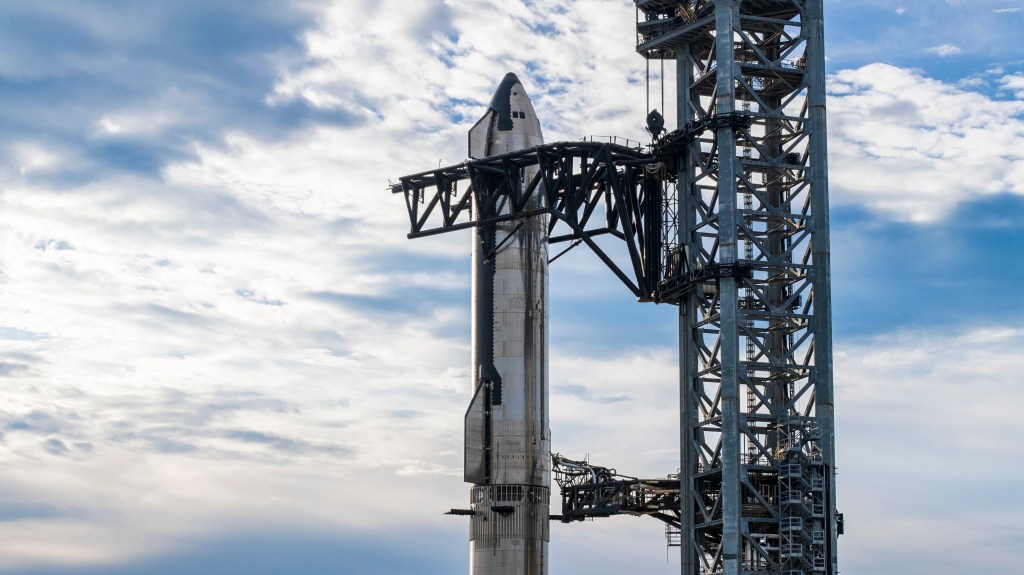**Image Credits:**[SpaceX\(opens in a new window\)](https://www.spacex.com/)Google and SpaceX are in talks to launch orbital data centers in space,[reports](https://www.wsj.com/tech/spacex-google-in-talks-to-explore-data-centers-in-orbit-7b7799e2)The Wall Street Journal, citing sources familiar with the matter\.
The potential deal comes as SpaceX gears up for its[$1\.75 trillion IPO](https://techcrunch.com/2026/04/01/spacex-files-confidentially-for-ipo-in-mega-listing-potentially-valued-at-1-75-trillion-report-says/)later this year, selling investors on the idea that data centers in space will be the cheapest place to put AI compute within the next few years\. It also follows[Anthropic’s deal with SpaceX](https://techcrunch.com/2026/05/06/is-xai-a-neocloud-now/)last week to use computing resources from xAI’s data center in Memphis, Tennessee, with the potential to work together on orbital ones in the future\. \(SpaceX acquired xAI in February\.\)
Google is reportedly talking to other rocket\-launch companies as well\. The company also plans to launch prototype satellites by 2027 as part of an initiative called Project Suncatcher, announced late last year\.
Elon Musk has[created hype](https://techcrunch.com/2026/04/05/can-orbital-data-centers-help-justify-a-massive-valuation-for-spacex/)for orbital data centers, claiming they are cheaper to operate\. Advocates also point out they are free from the local backlash that U\.S\. ground\-based buildouts attract\. However, as[TechCrunch recently reported](https://techcrunch.com/2026/02/11/why-the-economics-of-orbital-ai-are-so-brutal/), today’s terrestrial data centers are much cheaper than those in orbit once satellite construction and launch costs are factored in\.
Google invested $900 million in SpaceX in 2015, according to[regulatory filings](https://www.sec.gov/Archives/edgar/data/1652044/000165204416000012/goog10-k2015.htm)\.
TechCrunch has reached out to Google and SpaceX for comment\.
### Newsletters
Subscribe for the industry’s biggest tech news
## Related
## Latest in AI
Reports indicate Google is in talks with SpaceX to launch data centers into space, a potential move to address energy consumption and infrastructure demands for AI workloads.
Google will pay SpaceX $920 million per month from October 2026 through June 2029 for AI compute capacity using approximately 110,000 NVIDIA GPUs, as a bridge to meet demand for Gemini Enterprise while Google expands its own AI infrastructure.
This Ars Technica article explores the technical challenges of building orbital data centers, focusing on SpaceX's plans for a constellation of AI1 satellites to power GPUs in space, covering heat dissipation, radiation, and latency issues.
Elon Musk has proposed putting data centers in space, and Lonestar Data Holdings founder Christopher Stott explains that the architecture would involve satellites flying in synchronized formation, connected by optical lasers and radio frequencies, with cost being a major incentive for scaling AI data centers in space.
This article critiques the SpaceX-NVIDIA Starmind AI1 orbital data center concept, arguing that space is impractical for cooling AI hardware due to radiation-dominated heat rejection and massive radiator requirements. It highlights the technical hurdles of building and launching a million AI satellites.