An article from Hackaday details how a faulty SD card with shorted capacitors was revived using X-ray and thermal imaging to diagnose and remove the defective components, allowing data recovery.
# Reviving An SD Card With Shorted Capacitors
Source: [https://hackaday.com/2026/08/28/reviving-an-sd-card-with-shorted-capacitors/](https://hackaday.com/2026/08/28/reviving-an-sd-card-with-shorted-capacitors/)
[Skip to content](https://hackaday.com/2026/08/28/reviving-an-sd-card-with-shorted-capacitors/#content)
A nice thing about SD cards is that even in their non\-micro format they are conveniently small\. This is however a bit of a problem when an SD card stops working, as they are not exactly designed to be easy to service, or to recover data from\. There is however a very good chance that the Flash memory and controller are still fine, and it’s actually one of the passives on the tiny PCB that failed, as with the 32 GB SD card that \[Yevgeniy Kapishon\][recently diagnosed and recovered](https://aesonlabs.ca/blogs/monolithic-sd-card-data-recovery-a-hands-on-case-study/)data from for a customer\.
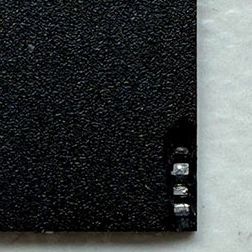Tiny capacitors in an SD card package\. \(Credit: Aeson Labs\)A big hint during initial diagnostics was a clear short between the supply rail and ground, but as became clear when taking the SD card apart, this one was built as a monolithic package, without exposed components on a PCB as in older SD cards\. Correspondingly an X\-ray machine and thermal camera were used to figure out what was inside the package, and where the short was located\.
By combining the hot spot image with the X\-ray it was determined that the problem was with some passives near the edge of the package\. Some careful material removal later two miniscule capacitors were found to be the culprit and gently removed\. With this the short on the power rail vanished, and the SD card started working again\.
Having a shorted MLCC or similar passive component is a very common failure mode in general which can cripple even the most expensive device\. Even if SD cards still aren’t really repairable, it’s at least reassuring to know that in many cases the data is fairly easy to recover once you have identified and removed the offending part\.
- [**](https://www.facebook.com/sharer/sharer.php?u=https%3A%2F%2Fhackaday.com%2F2026%2F08%2F28%2Freviving-an-sd-card-with-shorted-capacitors%2F)
- [**](https://twitter.com/intent/tweet?text=Reviving%20An%20SD%20Card%20With%20Shorted%20Capacitors%20via%20@hackaday&url=https://hackaday.com/2026/08/28/reviving-an-sd-card-with-shorted-capacitors/)
- [**](https://www.linkedin.com/shareArticle?url=https%3A%2F%2Fhackaday.com%2F2026%2F08%2F28%2Freviving-an-sd-card-with-shorted-capacitors%2F)
- [**](mailto:?subject=Reviving+An+SD+Card+With+Shorted+Capacitors%20|%20Hackaday&body=https%3A%2F%2Fhackaday.com%2F2026%2F08%2F28%2Freviving-an-sd-card-with-shorted-capacitors%2F)
This is a survey and ongoing project testing the capacity, performance, and reliability of various microSD cards, including fake flash, to determine their value and quality for consumers.
A detailed account of repairing a Commodore PET computer from 1977, involving diagnosing multiple bad chips and using adapter boards to replace obsolete ROMs.
A Cambridge University project led by Leontien Talboom aims to rescue data from degrading floppy disks, addressing both physical deterioration and the loss of tacit knowledge from the retro computing community.
The author recounts the failure of their Raspberry Pi home server's SD card and their process of rebuilding with a focus on minimizing writes and improving redundancy using NixOS, zram, and external backups.
This article describes a DIY business card designed with PCBs that uses NFC energy harvesting to power LED animations without batteries, involving MCU implementation and techniques like Charlieplexing.