OpenAI hosted its first Robotics Symposium on April 27, 2019, bringing together robotics and machine learning experts to discuss learning robots and demonstrate their humanoid robot hand solving manipulation tasks using vision and reinforcement learning.
We hosted the first OpenAI Robotics Symposium on April 27, 2019.
# OpenAI Robotics Symposium 2019
Source: [https://openai.com/index/symposium-2019/](https://openai.com/index/symposium-2019/)
OpenAIWe hosted the first OpenAI Robotics Symposium on April 27, 2019\.
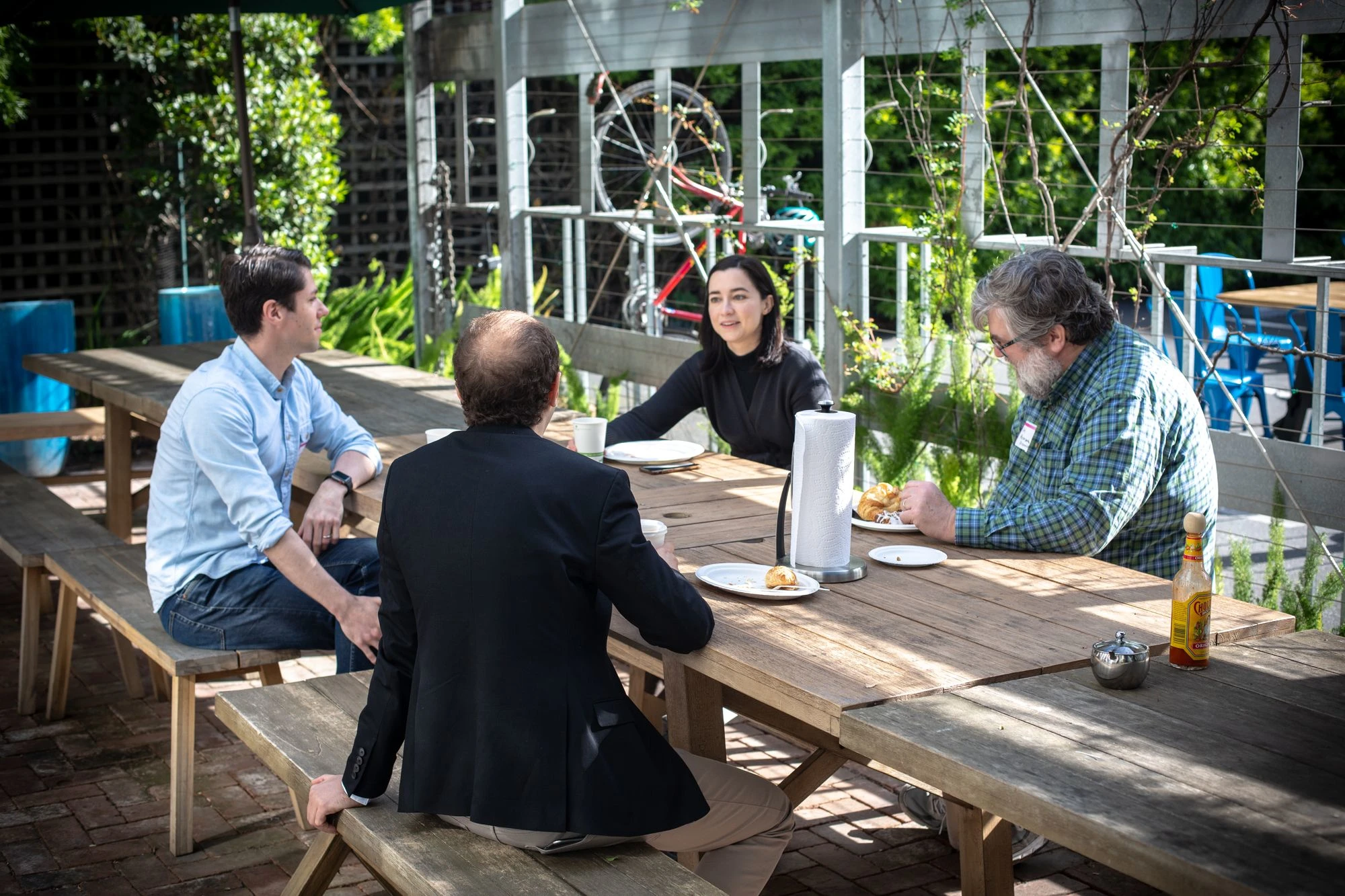
Robots that learn are an exciting path forward, yet there are differing approaches and opinions on how to make progress\. The event brought together a diverse set of people from both robotics and machine learning communities as well as academics and industry leaders to create a platform to exchange ideas and address open questions in building complex robot systems\.
[Robots that learn](https://openai.com/index/robots-that-learn/)are a development that will allow robots to become part of our everyday lives\. While we have some ideas on how to get there, we think it is important to engage with people from other organizations and disciplines to exchange and discuss ideas\. Creating these robots is inherently a multidisciplinary approach—it not only requires technical expertise, but also a deeper understanding of how these robots can be deployed safely and interact with humans in the real world\.
Since the event was hosted at our office, we took the opportunity to perform a[live demo\(opens in a new window\)](https://twitter.com/OpenAI/status/1122198642096398336)of our humanoid robot hand manipulating a block using vision and reinforcement learning\.
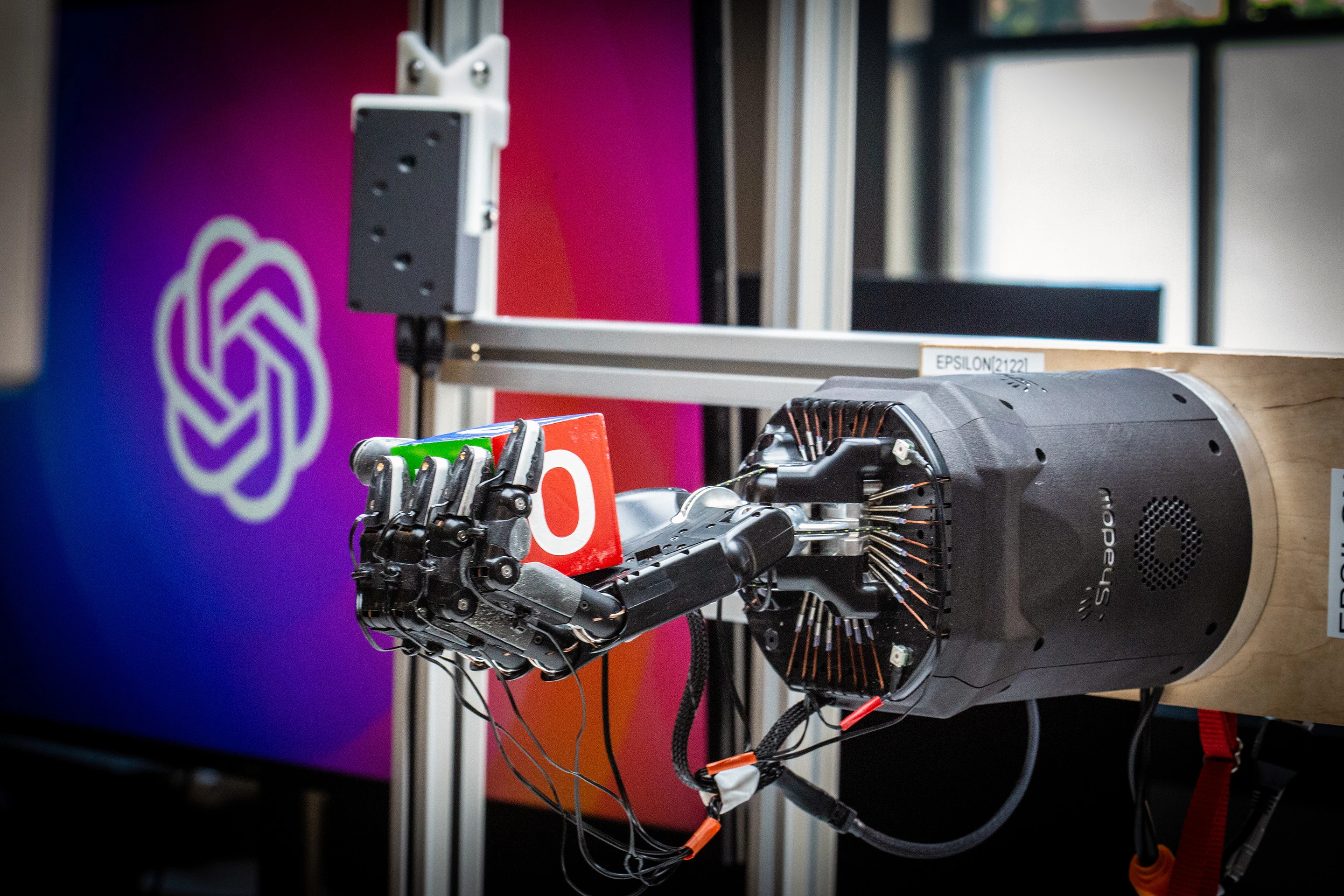
We were excited to show the hand to people and have the OpenAI Robotics team “on hand” to answer their questions\! We hope to do this again in the future as it is a very different experience to see this in person\.
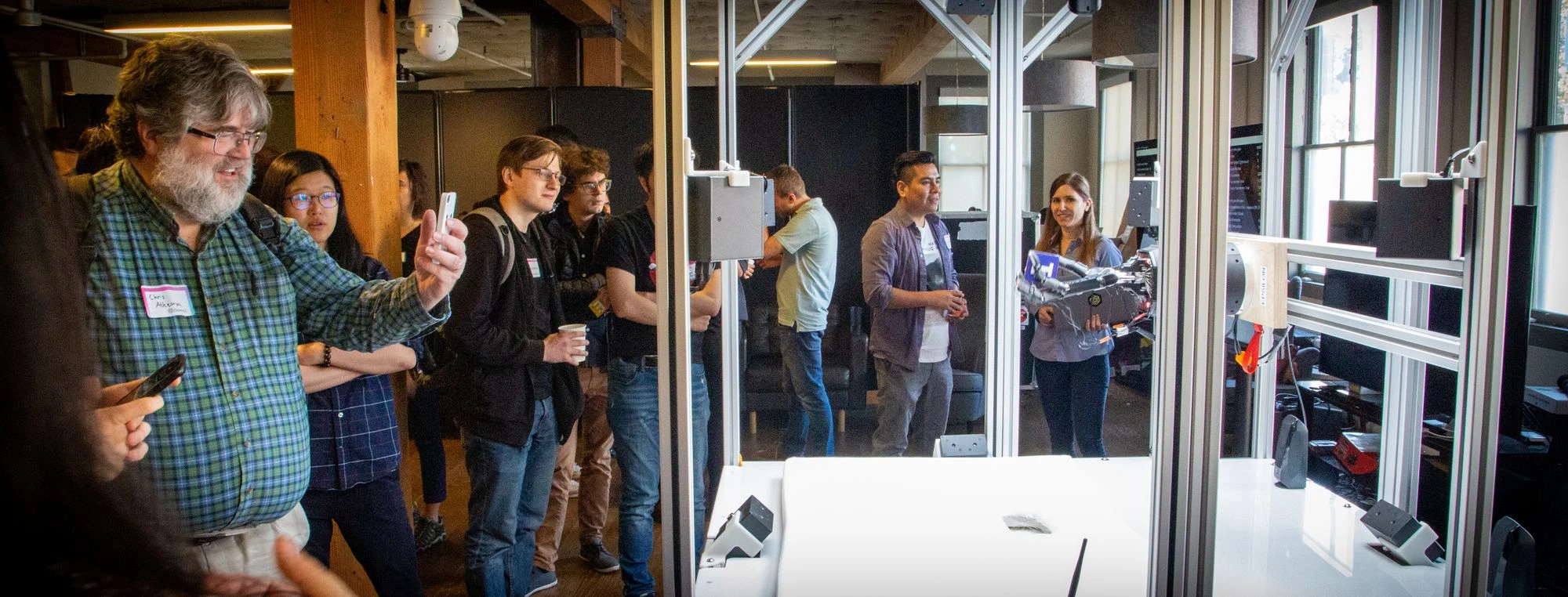
We were extremely pleased with the outcome of the event—this was an experimental format and our expectations were definitely exceeded\. The talks during the day led to interesting discussions within our team and resulted in some new ideas \(e\.g\., self\-supervision\) and perspectives \(e\.g\., traditional robotics vs deep learning robotics\)\. After chatting with the participants and speakers, it was clear everyone felt they benefited from this event and left with a shared understanding of the diversity in the different approaches to solving the same problems\. Given this feedback, we intend to repeat this format in the future, possibly as an annual symposium\. We’ll share details about upcoming events at a later date\.
If you would like to help us do research on robots that learn, please get in touch\\.
*Thanks to Loren Kwan, Diane Yoon, and Maddie Hall for co\-organizing the event, to all the OpenAI staff volunteers, and to Blake Tucker for filming and photography\.*
OpenAI hosted the first self-organizing conference on machine learning (SOCML) with over 150 AI practitioners, focusing on peer-to-peer learning and serendipitous interactions rather than traditional keynote-driven formats. The event successfully facilitated cross-disciplinary conversations and generated new research ideas across robotics, neuroscience, and AI diversity.
OpenAI describes a robot learning system powered by two neural networks — a vision network trained on simulated images and an imitation network that generalizes task demonstrations to new configurations. The system is applied to block-stacking tasks, learning to infer and replicate task intent from paired demonstration examples.
OpenAI Scholars 2019 program concludes with eight scholars completing final projects showcased at Demo Day, demonstrating how professionals from various fields can transition into machine learning through education and mentorship.
OpenAI announces its 2019 class of eight Scholars selected from 550 applicants, bringing diverse expertise from literature, philosophy, biology, and other fields to apply toward AI research projects in reinforcement learning and NLP.
OpenAI hosted its first hackathon on March 3rd with 100 AI community members, resulting in dozens of projects spanning safety, healthcare, reinforcement learning, and creative applications. The event featured diverse participants from high schoolers to industry practitioners and emphasized gender balance and inclusive representation.