Cached at:
09/10/26, 02:13 PM
# Run any model,on any backend
Source: [https://imvision12.github.io/ZeroModels/](https://imvision12.github.io/ZeroModels/)
[NewSAM 3, Gemma 4 and GLM\-5 have landed](https://imvision12.github.io/ZeroModels/sam3/)
100\+ model families ported to pure Keras 3, with weights converted from the original checkpoints\. The same code runs on JAX, PyTorch and TensorFlow, and nothing from`transformers`or`torch`is needed at run time\.
## Two calls to a prediction[¶](https://imvision12.github.io/ZeroModels/#two-calls-to-a-prediction)
Build the model with`from\_weights`, then feed it whatever its processor produces\. Every model in the library follows this shape, so moving between a detector, a depth estimator and an LLM costs you nothing\.
```
pip install -U zeromodels
```
Weights come from the[`zeromodels`](https://huggingface.co/zeromodels)org on the Hub, and the same identifier builds both the model and its processor, so the resolution and normalization always match the checkpoint\.
```
import os
os.environ["KERAS_BACKEND"] = "torch" # or "jax" / "tensorflow"
from PIL import Image
from zeromodels.models.detr import DETRDetect, DETRImageProcessor
model = DETRDetect.from_weights("zeromodels/detr-resnet-50")
processor = DETRImageProcessor.from_weights("zeromodels/detr-resnet-50")
image = Image.open("photo.jpg").convert("RGB")
output = model(processor(image)["pixel_values"], training=False)
results = processor.post_process_object_detection(
output, threshold=0.9, target_sizes=[(image.height, image.width)]
)[0]
```
### One call, three sources[¶](https://imvision12.github.io/ZeroModels/#one-call-three-sources)
`from\_weights`dispatches on what you hand it: a preconverted Keras repo on the Hub, a bare variant name that converts an upstream checkpoint on the fly, or any compatible Hugging Face repo behind the`hf:`prefix\. Architecture details, including the class count of a fine\-tune, are read from the repo config\.
[Loading weights](https://imvision12.github.io/ZeroModels/loading_weights/)·[Main classes](https://imvision12.github.io/ZeroModels/main_classes/)
```
from zeromodels.models.qwen3 import Qwen3TextGenerate
from zeromodels.models.segformer import SegFormerSemanticSegment
# Preconverted Keras weights (zm_config.json)
SegFormerSemanticSegment.from_weights("zeromodels/segformer_b0_ade_512")
# Bare variant: converted from upstream on the fly
Qwen3TextGenerate.from_weights("qwen3-8b")
# Any Hub repo with a matching model_type
SegFormerSemanticSegment.from_weights("hf:nvidia/segformer-b0-finetuned-ade-512-512")
# Architecture only, randomly initialized
SegFormerSemanticSegment.from_weights(
"zeromodels/segformer_b0_ade_512", load_weights=False
)
```
### Measured outputs, not illustrative ones[¶](https://imvision12.github.io/ZeroModels/#measured-outputs-not-illustrative-ones)
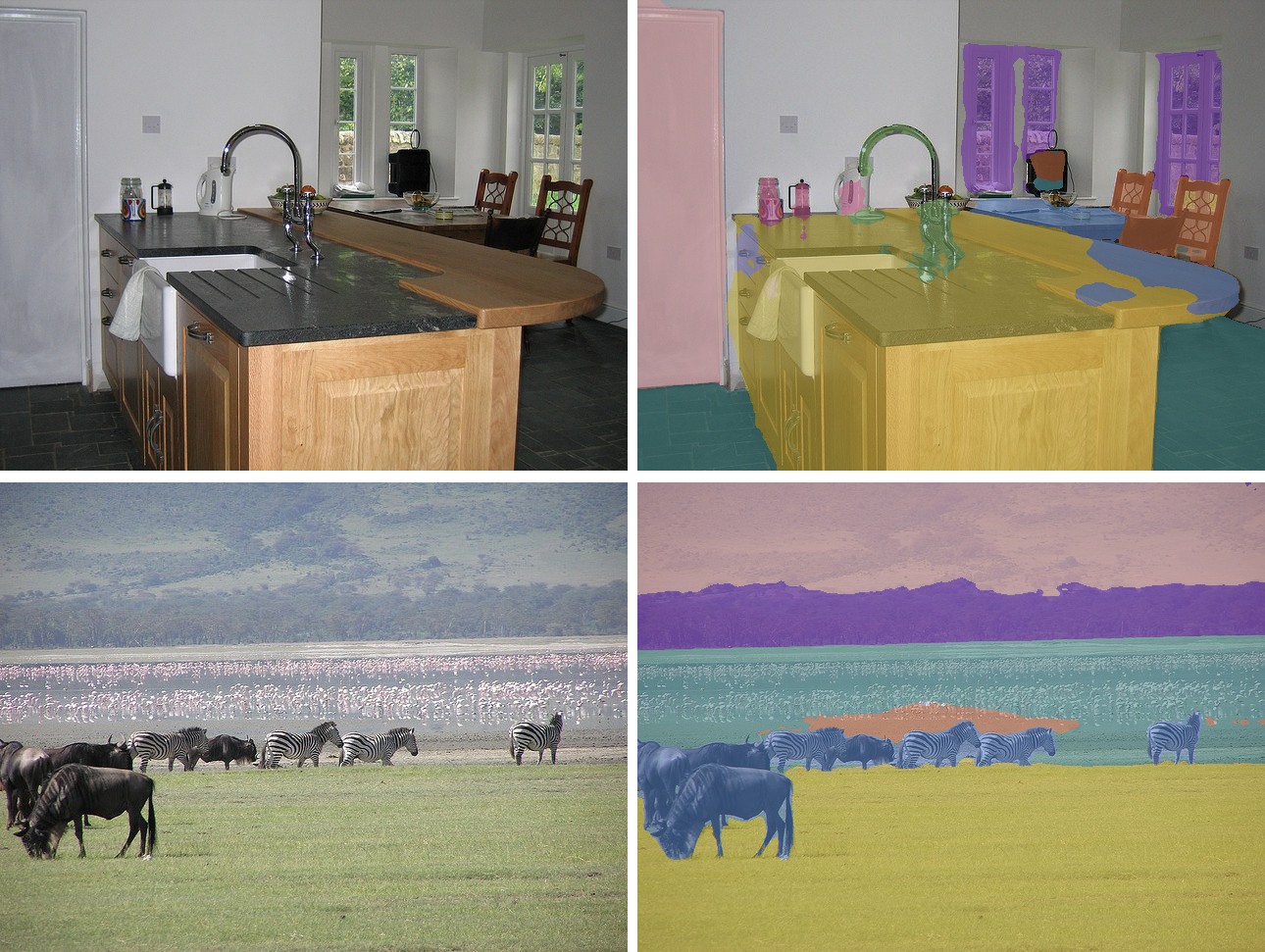
Every figure and every printed result on a model page comes from actually running the snippet beside it on the image or audio clip shown\. Nothing is hand\-written to look plausible, so what you read is what you get when you run it yourself\.
[Browse the model pages](https://imvision12.github.io/ZeroModels/main_classes/)
### Any backend, either data format[¶](https://imvision12.github.io/ZeroModels/#any-backend-either-data-format)
Set`KERAS\_BACKEND`before importing Keras and the rest is unchanged\. Models read`keras\.config\.image\_data\_format\(\)`when they are**constructed**, so set that first too if you want`channels\_first`; processors take a per\-instance`data\_format`argument\.
[Configuration](https://imvision12.github.io/ZeroModels/configuration/)·[Utilities](https://imvision12.github.io/ZeroModels/utils/)
```
import os
os.environ["KERAS_BACKEND"] = "jax" # or "torch" / "tensorflow"
import keras
keras.config.set_image_data_format("channels_first")
```
### Large checkpoints, as they ship[¶](https://imvision12.github.io/ZeroModels/#large-checkpoints-as-they-ship)
- GPT\-OSS 120B loads at bfloat16 with its MoE experts left packed in MXFP4 and dequantized on the fly, so it stays near 66 GB instead of the ~130 GB an fp32 expansion would cost\.
- Weight\-only int8, int4, fp8 and mxfp4 are arguments to the same`from\_weights`call, on any model\.
[Quantization](https://imvision12.github.io/ZeroModels/quantization/)·[int8](https://imvision12.github.io/ZeroModels/quantization_int8/)·[int4](https://imvision12.github.io/ZeroModels/quantization_int4/)·[fp8](https://imvision12.github.io/ZeroModels/quantization_fp8/)·[mxfp4](https://imvision12.github.io/ZeroModels/quantization_mxfp4/)
```
from zeromodels.models.gpt_oss import GptOssTextGenerate
# Experts stay packed in MXFP4, dequantized in the expert layer's call
model = GptOssTextGenerate.from_weights("zeromodels/gpt-oss-120b")
# Quantize weight-only on the way in, for a smaller footprint again
model = GptOssTextGenerate.from_weights("zeromodels/gpt-oss-120b", quantization="int8")
```
## Where to start[¶](https://imvision12.github.io/ZeroModels/#where-to-start)
## Ready to use ZeroModels?
One install, 118 model families, three backends\.