OpenAI hosted the first self-organizing conference on machine learning (SOCML) with over 150 AI practitioners, focusing on peer-to-peer learning and serendipitous interactions rather than traditional keynote-driven formats. The event successfully facilitated cross-disciplinary conversations and generated new research ideas across robotics, neuroscience, and AI diversity.
Last week we hosted over a hundred and fifty AI practitioners in our offices for our first self-organizing conference on machine learning.
# Report from the self-organizing conference
Source: [https://openai.com/index/report-from-the-self-organizing-conference/](https://openai.com/index/report-from-the-self-organizing-conference/)
Last week we hosted over a hundred and fifty AI practitioners in our offices for our first self\-organizing conference on machine learning\.
Our first group learning experiment\! Last week we hosted over a hundred and fifty AI practitioners in our offices for our first self\-organizing conference on machine learning\. The goal was to accelerate AI research by bringing a diverse group of people together and making it easy for them to educate each other and generate new ideas\. To achieve this we sought to build an entire event around the chance hallway conversations, serendipitous lunches and inspiring encounters that people have at traditional conferences\.
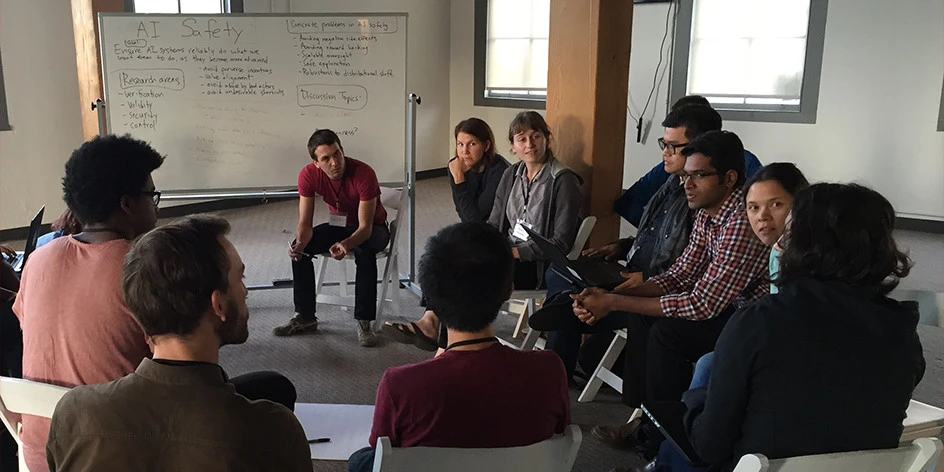
The format worked\. PhD students talked to professors, hobbyists talked to full\-time researchers, and designers mingled with neuroscientists; most importantly, many people left the event with new research ideas\. Participants identified issues ranging from the need for a greater theoretical underpinning within robotics, to how we might make use of neuroscience to accelerate AI development, to ways to increase the diversity of the AI community\.[Minutes from some of these meetings are available\.\(opens in a new window\)](https://github.com/openai/socml16/wiki)
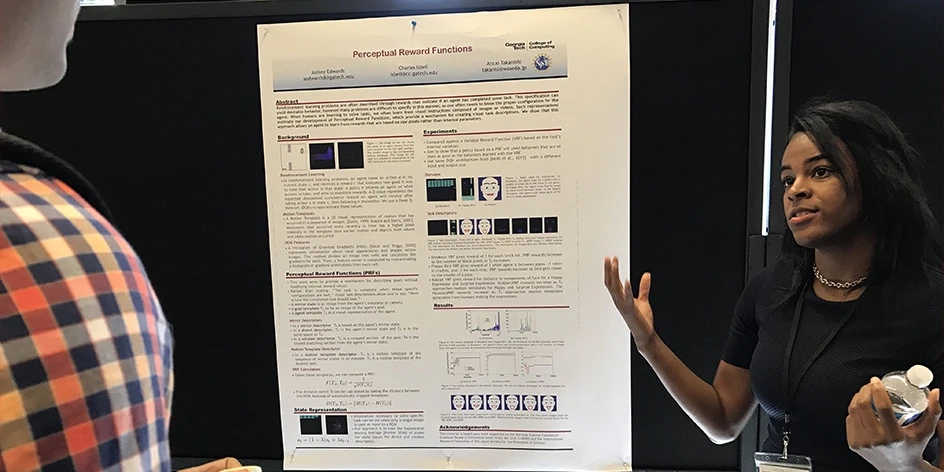
The backbone of typical conferences consists of keynotes, plenaries, and panels, turning many of the attendees into passive spectators\. At SOCML, the backbone of the event was about the interaction between participants, and they were able to form sessions, choose moderators, give impromptu lectures, and debug each other’s problems, without much administration\. Everyone taught everyone else and everyone learned from everyone else\.
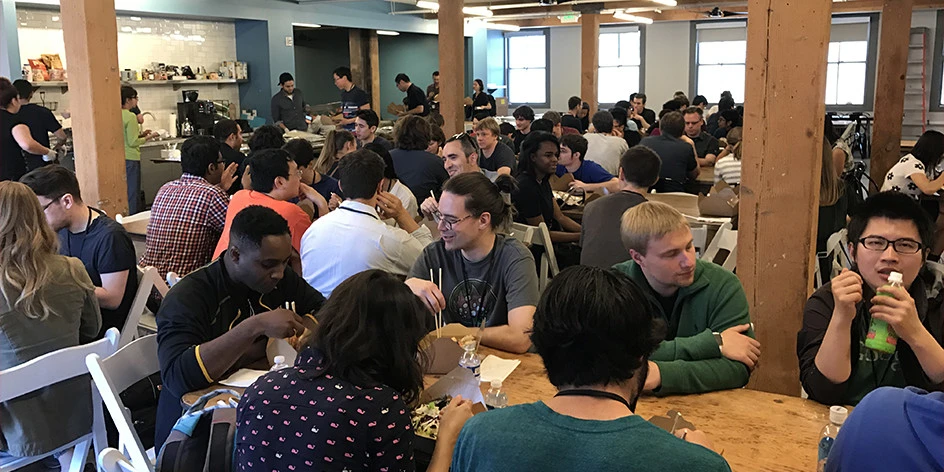
The self\-organizing nature makes this sort of conference reasonably easy and affordable to host, and brings talented minds together to work on urgent issues\. If you’re keen to host a self\-organizing conference of your own we’ll be gathering feedback and adding some tips and tricks to the[wiki\(opens in a new window\)](https://github.com/openai/socml16/wiki)in the coming weeks\. Good luck\!
OpenAI is hosting the first Machine Learning Unconference on October 7-8, 2016 in San Francisco, an experimental participant-driven gathering focused on networking and discussion rather than traditional conference presentations. The free event welcomes ML researchers, PhD students, and industry scientists, with special support for underrepresented groups in machine learning.
OpenAI hosted its first Robotics Symposium on April 27, 2019, bringing together robotics and machine learning experts to discuss learning robots and demonstrate their humanoid robot hand solving manipulation tasks using vision and reinforcement learning.
OpenAI hosted its first hackathon on March 3rd with 100 AI community members, resulting in dozens of projects spanning safety, healthcare, reinforcement learning, and creative applications. The event featured diverse participants from high schoolers to industry practitioners and emphasized gender balance and inclusive representation.
OpenAI reports on a four-week global tour across 25 cities in 6 continents led by CEO Sam Altman to gather feedback from users, developers, and policymakers. The company commits to improving product accessibility, developing governance practices for foundation models, and unlocking AI's benefits through literacy and creator support.
OpenAI announces its first cohort of Scholars in 2018, a program to help experienced software developers transition into machine learning practitioners through self-directed learning.