@ycombinator: Lightberry (F25) is the first and currently only humanoid company in the US that can ship robots - while using an exist…
Summary
Lightberry (YC F25) announced its Lumi humanoid robot became the first and only humanoid cleared by the U.S. Department of War and exempted from the FCC Covered List, enabled by U.S. manufacturing and full control of the robot's sensors and software.
View Cached Full Text
Cached at: 10/31/26, 03:23 AM
Lightberry (F25) is the first and currently only humanoid company in the US that can ship robots - while using an existing supply chain.
https://t.co/R35e8DmpRW
Lightberry Lumi is the First and Only American Humanoid Robot Company cleared by the U.S. Government
Source: https://lightberry.com/press/dow-approval SAN FRANCISCO, Oct. 30, 2026 — Lightberry, the company building autonomous robots that live and work around people, today announced that its Lumi line of humanoids has received approval from the U.S. Department of War (DoW).
Based on that approval, the Federal Communications Commission’s Public Safety and Homeland Security Bureau exempted Lumi from the FCC Covered List today, making Lightberry the first, and so far only, humanoid robot company to be approved.
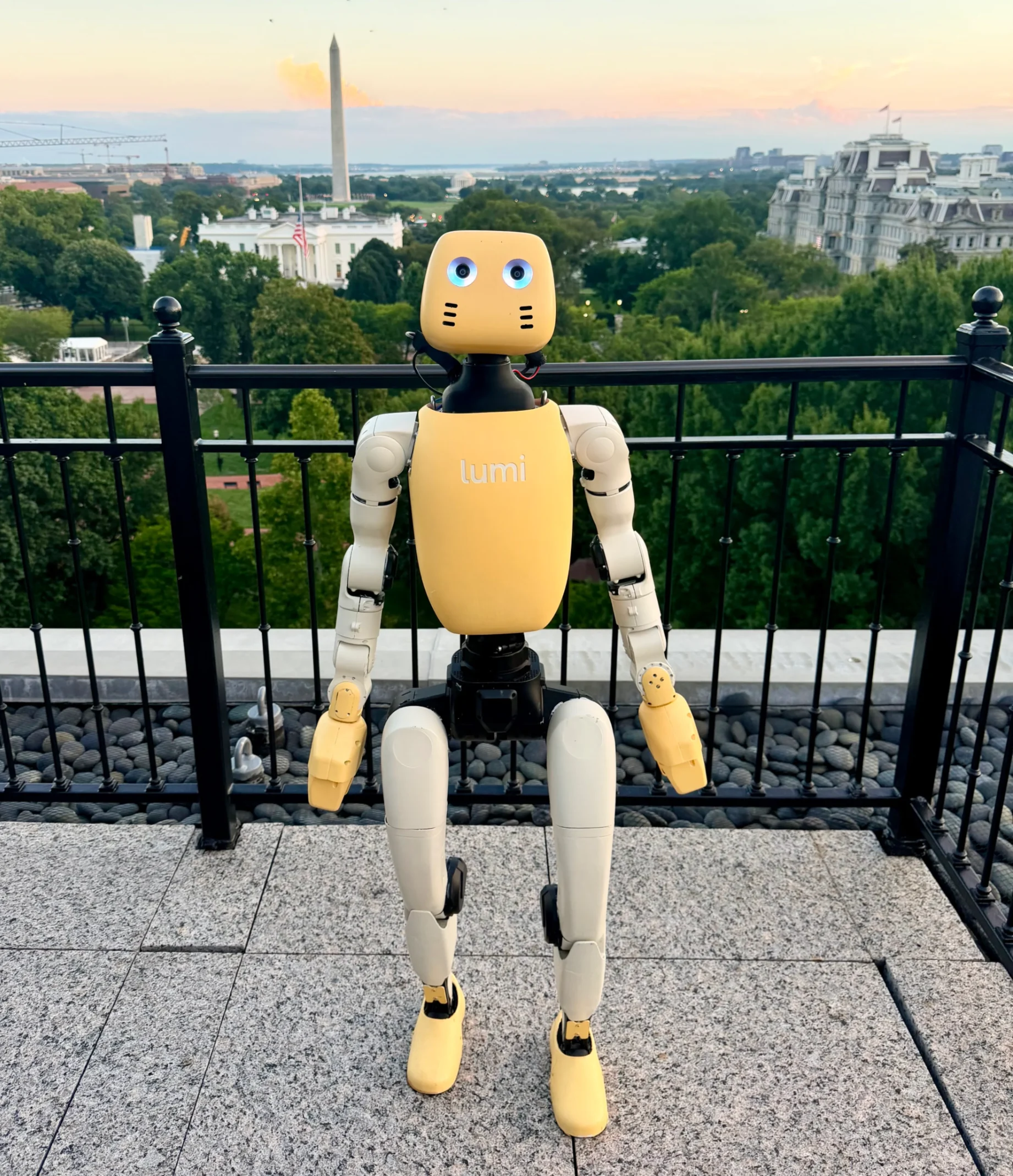
A Lightberry Lumi on its first trip to DC.## How Lumi earned the exemption
In July, the FCC added foreign-produced advanced robotic devices, including humanoids, to the Covered List, its list of equipment deemed an unacceptable risk to U.S. national security. New devices on the list cannot get the FCC authorization required to import, market or sell them in the United States. Robot manufacturers can apply to DoW for review, and devices granted this Conditional Approval are exempt from the list.
In its Public Notice (DA 26-1181)[1], the FCC described the Conditional Approval as “a specific determination” by DoW “that such devices do not pose risks to U.S. national security.” Lightberry joins a short list of approved robotics companies and is the only humanoid robot company on it.
Lightberry earned the approval with two commitments:
- **Full control over what runs inside Lumi.**Lightberry replaces the robot’s sensors, onboard computer and software with its own. This allows Lightberry to create a delightful experience around interacting with robots, while addressing all privacy concerns raised by the DoW.
- **American manufacturing.**Lightberry’s U.S. manufacturing starts with Lumi’s body, head and hands, and the rest of the robot will follow. The approval is tied to this plan and to ongoing vetting of Lumi.
“A humanoid robot works right next to people, with cameras and microphones, so you need to know exactly what’s running inside it,” said Ali Attar, co-founder and CEO of Lightberry. “That’s why we replaced every sensor and all of the software on Lumi, and why we’re investing in American manufacturing. This approval confirms that approach, and it means Lumi robots are cleared to go to work across the country.”
About Lightberry
Lightberry builds autonomous robots that live and work around people. The company’s first robot, Lumi, was designed to be “the world’s most interactive robot”.
Lumi is a 4’2” (127 cm) yellow robot that looks like it’s straight out of an animated movie. It is designed to hold conversations, guide visitors, tell stories, entertain a crowd, take photos and look up information. Lightberry sells Lumi directly to businesses with non-technical teams that want a robot they can deploy right away. The robot works from the moment it arrives, with no robotics team required. Robot deployment companies and university robotics research groups also love working with Lumi for its versatility, stability, and compatibility with the Unitree G1 – the world’s most popular research platform.
Lumi Founder Edition units are $39,990 and ship in 2026, with reservations open atlightberry.com.
The company was founded in 2025 by Ali Attar and Stephan Koenigstorfer and is based in San Francisco. Half of its team are artists from studios like Pixar and Disney, and half are engineers from companies like Google and General Electric, working side by side to make robots that are delightful and fun to be around.
“We believe robotics will shine brightest where art meets technology,” said Ali Attar. “We’re building autonomous robots like Lumi that people love being around and that take care of the tasks we don’t want to do. They’ll add a little magic wherever they work and bring joy to everyone they meet.”
**Media contact:**For questions, please contact us at[email protected]
Similar Articles
SF startup Lightberry launches Lumi, a custom Unitree G1 humanoid robot designed for interaction
SF startup Lightberry launches Lumi, a custom humanoid robot based on the Unitree G1, designed for interaction.
Light Origins' humanoid robot can see, think, and act on the world all by itself
Light Origins announces a humanoid robot powered by a single perceptive whole-body policy that autonomously decides whether to walk, climb, or vault over unseen terrain, without skill labels, state machines, or motion generators at inference.
US distributor of China’s most popular humanoid robots pivots after US ban
A US distributor of Chinese humanoid robots is pivoting to develop and manufacture robots domestically after the US government banned foreign-made robots on national security grounds, citing cybersecurity risks and promoting domestic production.
@oliviscusAI: the reason humanoids stayed in labs was never the software. it was that one actuator could cost more than a used car. b…
Berkeley Humanoid Lite uses 3D-printed modular gearboxes and off-the-shelf hobby parts to cut costs, offering a full humanoid robot under $5k with provided CAD, firmware, and RL training stack.
@rohanpaul_ai: China’s humanoid robot race has moved from lab demos to real shipment. Global humanoid shipments grew nearly 800% in 20…
Global humanoid robot shipments grew nearly 800% in 2025, with China now having 140 makers and 330 new models launched in 12 months; AGIBOT ranks #1 per IDC analysis.