A California regulatory delay prevents Waymo from charging for rides in its new Chinese-made Ojai robotaxi, offering free rides until at least September. The delay also blocks Waymo's expansion plans in Northern and Southern California.
<p>Robotaxi companies have thrived in California, where the good weather, enthusiasm for technology, and sophisticated labor force have supported their growth for nearly two decades. But a delayed decision from a state regulatory agency is now slowing Alphabet’s subsidiary Waymo, the US leader in driverless robotaxi service.</p>
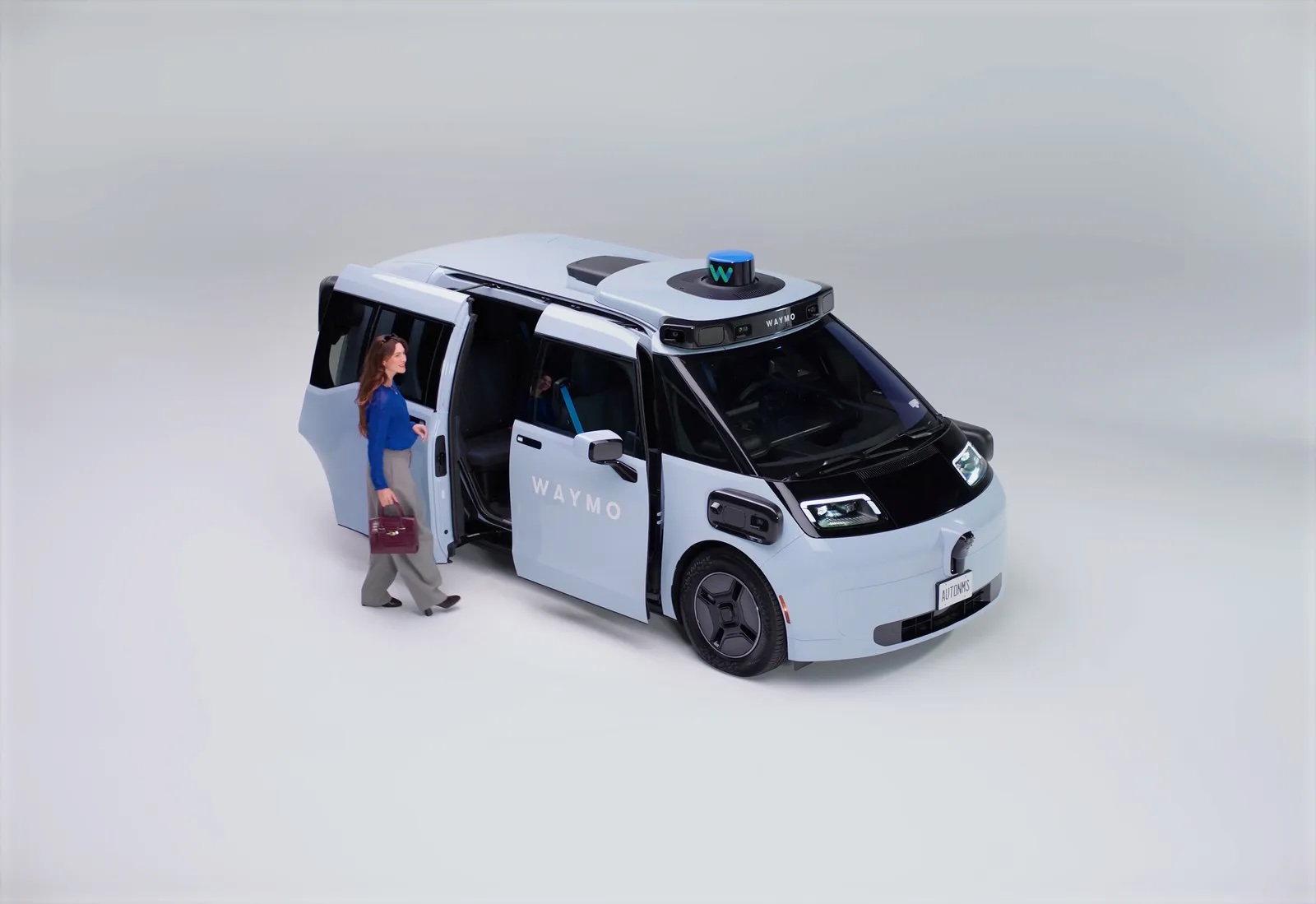
<p>The holdup means that Waymo isn’t yet allowed to expand into parts of Northern and Southern California. And, in an upside for riders, Waymo still isn’t able to charge California passengers for rides in its new vehicle, a pale blue Chinese-made car it’s calling the Ojai, which started picking up riders last month.</p>
<p>If Waymo continues to operate these vehicles in its driverless ride-hail service, they could be gratis until the end of September and perhaps beyond. (The company continues to charge for rides in its Jaguar I-Pace robotaxis, which make up the majority of its fleet.)<br>
Unlike other states that allow robotaxis to launch testing operations and later public service without much, if any, oversight, California doesn’t allow the vehicles to hit the roads without permission. To put their autonomous vehicles on the road, companies require approval from the state Department of Motor Vehicles. They also need permission from the California Public Utilities Commission, which regulates taxi and other transportation services, to carry paying passengers.<img width="1600" height="1099" src="https://cdn.arstechnica.net/wp-content/uploads/2026/07/OJAI_EXT_Rider_3.jpeg" class="fullwidth full" alt="" decoding="async" loading="lazy" srcset="https://cdn.arstechnica.net/wp-content/uploads/2026/07/OJAI_EXT_Rider_3.jpeg 1600w, https://cdn.arstechnica.net/wp-content/uploads/2026/07/OJAI_EXT_Rider_3-640x440.jpeg 640w, https://cdn.arstechnica.net/wp-content/uploads/2026/07/OJAI_EXT_Rider_3-1024x703.jpeg 1024w, https://cdn.arstechnica.net/wp-content/uploads/2026/07/OJAI_EXT_Rider_3-768x528.jpeg 768w, https://cdn.arstechnica.net/wp-content/uploads/2026/07/OJAI_EXT_Rider_3-1536x1055.jpeg 1536w, https://cdn.arstechnica.net/wp-content/uploads/2026/07/OJAI_EXT_Rider_3-980x673.jpeg 980w, https://cdn.arstechnica.net/wp-content/uploads/2026/07/OJAI_EXT_Rider_3-1440x989.jpeg 1440w" sizes="auto, (max-width: 1600px) 100vw, 1600px">
Credit:
<a href="https://media.wired.com/photos/6a1765da6f62ca56a1fdfc3c/191:100/w_1280,c_limit/OJAI_EXT_Rider_3.jpg" target="_blank">Waymo</a>
</p><p><a href="https://arstechnica.com/cars/2026/07/free-waymo-rides-in-california-you-can-thank-a-regulatory-quirk/">Read full article</a></p>
<p><a href="https://arstechnica.com/cars/2026/07/free-waymo-rides-in-california-you-can-thank-a-regulatory-quirk/#comments">Comments</a></p>
# Free Waymo rides in California? You can thank a regulatory quirk.
Source: [https://arstechnica.com/cars/2026/07/free-waymo-rides-in-california-you-can-thank-a-regulatory-quirk/](https://arstechnica.com/cars/2026/07/free-waymo-rides-in-california-you-can-thank-a-regulatory-quirk/)
Robotaxi companies have thrived in California, where the good weather, enthusiasm for technology, and sophisticated labor force have supported their growth for nearly two decades\. But a delayed decision from a state regulatory agency is now slowing Alphabet’s subsidiary Waymo, the US leader in driverless robotaxi service\.
The holdup means that Waymo isn’t yet allowed to expand into parts of Northern and Southern California\. And, in an upside for riders, Waymo still isn’t able to charge California passengers for rides in its new vehicle, a pale blue Chinese\-made car it’s calling the Ojai, which started picking up riders last month\.
If Waymo continues to operate these vehicles in its driverless ride\-hail service, they could be gratis until the end of September and perhaps beyond\. \(The company continues to charge for rides in its Jaguar I\-Pace robotaxis, which make up the majority of its fleet\.\) Unlike other states that allow robotaxis to launch testing operations and later public service without much, if any, oversight, California doesn’t allow the vehicles to hit the roads without permission\. To put their autonomous vehicles on the road, companies require approval from the state Department of Motor Vehicles\. They also need permission from the California Public Utilities Commission, which regulates taxi and other transportation services, to carry paying passengers\.
[](https://cdn.arstechnica.net/wp-content/uploads/2026/07/OJAI_EXT_Rider_3.jpeg)
Credit:[Waymo](https://media.wired.com/photos/6a1765da6f62ca56a1fdfc3c/191:100/w_1280,c_limit/OJAI_EXT_Rider_3.jpg)
Waymo applied to the CPUC in January to expand its service area and to add its Ojai cars to its fleet\. In Northern California, its new proposed service area would span from Sea Ranch and Sacramento in the north, through Berkeley and Oakland, and into San Jose\. In Southern California, it would grow past Los Angeles into Thousand Oaks and Santa Clarita, and down to the Tijuana border past San Diego\.
Zoox has received NHTSA exemption to deploy up to 2,500 steering-wheel-free robotaxis annually and begin charging for rides, starting in Las Vegas next month, competing with Waymo and Tesla.
Waymo issued a recall for 3,871 robotaxis after incidents where vehicles entered freeway construction zones at highway speed; a software fix is under development and freeway operations are suspended until it is deployed.
Waymo pauses its robotaxi service in Atlanta after a vehicle drove into a flooded street and got stuck, following a similar pause in San Antonio. The company's software recall last week was insufficient to prevent the incident, highlighting ongoing challenges with autonomous vehicles in adverse weather.
Waymo is voluntarily recalling about 3,800 robotaxis in the U.S. to fix a software glitch that allowed them to drive into flooded roads, following incidents in Austin and San Antonio.